by Alan Farr
In the past, the Army geared its gunnery program towards combat arms Military Occupational Specialties (MOS). The gunnery program trained combat Soldiers to be highly proficient on their assigned weapon platforms, mounted or unmounted, to safely and accurately engage the enemy during a time of war. Due to the increased combat role of logistics personnel in the operating environment, logistics now require the same weapon system expertise as their combat arms counterparts, especially while traveling on the road, mounted in military vehicles. The Army gunnery program is important for sustainment units to train gun truck crews and increase levels of survivability and functionality.
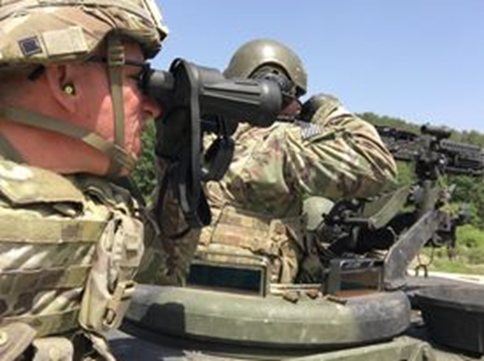
The Integrated Weapons Training Strategy (IWTS) training circular states, “The IWTS maximizes the use of training aids, devices, simulators, and simulations (known as TADSS) within all force-on-force and live-fire events in a systematic manner to increase and sustain Soldier and unit proficiency, effectiveness, and lethality.” Each crew in a gun truck with a mounted weapon platform consists of a driver, vehicle commander, and a gunner at a minimum. The vehicle commander, normally the highest-ranking, is in charge and is responsible for radio communication with external elements. Each member of the truck keeps a sharp lookout and must call out the distance, direction, and description for the gunner to engage the targets of enemy combatants at the vehicle commander’s order. Each member in the gun crew has their role. However, all of them must work together to qualify their crew on that gun truck.
Gunnery was introduced to the sustainment world in 2010, due to the rising need for sustainment personnel to provide their own protection for supply convoys. According to Captain Brooks, a company commander in the 49th Transportation Battalion, “On today’s battlefield, sustainment organizations with minimal self-defense capabilities are often exposed to direct combat. The 49th Transportation Battalion was the first sustainment unit to complete section gunnery.” In April of 2010, Training Circular (TC) 4-11.46, Convoy Protection Platform Gunnery (CPPG), was released to outline requirements for these units. Training CPPG is now a mandatory requirement for many combat support units to have qualified gun truck crews. This training, although challenging, is necessary to train logisticians on tactical skills that will prepare them to provide security on their convoys in an operational environment.