Killing Zombies: How to Preserve your Organization’s ‘Brainpower’

Killing Zombies: How to Preserve your Organization’s ‘Brainpower’

By Jake Conrad

We are all familiar with zombies. We see them plastered across pop culture in movies, video games, and television shows. You may have even read a full length novel about them! Today, zombies are everywhere. But what if I told you that they had infiltrated the Army, and that most of us interact with them every day?

These pesky intruders are known as ‘Staff Zombies’ and they come in many shapes and sizes. They may be difficult to spot at first, but once recognized, they are nearly impossible to ignore. Throughout our careers, we have all seen and dealt with them. Staff Zombies can be unnecessary personally owned vehicle inspections before a long weekend, or they can be weekly storyboard requirements that go nowhere. Every unit has its own invaders, and often, the same ones permeate across the entire force. Please keep in mind, my use of ‘staff’ as the prefix to zombies isn’t a Myrerian reaction to any form of staff officership, but that will become evident later on.
Six Questions to Define Leadership

Six Questions to Define Leadership

by C.N. Miller

Editor’s Note: A version of this article was previously published on February 26, 2021 in the Eunomia Journal published by The Civil Affairs Association. Please click here to read the original article. 

The best lessons in life often come from repetition, severe emotional events, and failures. It’s why we train to reinforce skills and create situations that are hopefully worse than anything encountered in real life. There is an additional component to these lessons, the maturity to intellectually interrogate the events and extract the critical information that frames the knowledge for future decisions. The best mentors try to pass this information on in an effort to help the next generation avoid learning  these same difficult lessons the hard way. Unfortunately, while well-intentioned, the lack of emotional connection and perspective often fails to resonate and individuals end up repeating the mistakes anyway. These second-hand lessons tend to teach people what to think rather than how to think.

Life Calluses

Life Calluses

by Michael Philbert

I knew it would be hard, but I decided I would try anyway. 

I looked up, anticipating the energy it would take to jump and grasp the bars above. Could these tiny legs get this 200-pound body off the ground? I coiled my body and sprang upward, quickly gripping the bar. As I hung from the pull-up bars, I realized I felt ok; I could do this.

How to Enable as an Enabler

How to Enable as an Enabler


by Ryan Cornell-d’Echert

I am an Army Logistics officer who – for better or worse – has spent much of his career separated from other logisticians. I wish to share some lessons and observations that may be applicable to other “outsiders,” including long-term and short-term attachments and enablers in any unit. 

Stoic Leadership 

Stoic Leadership 


by Stefan Shirley

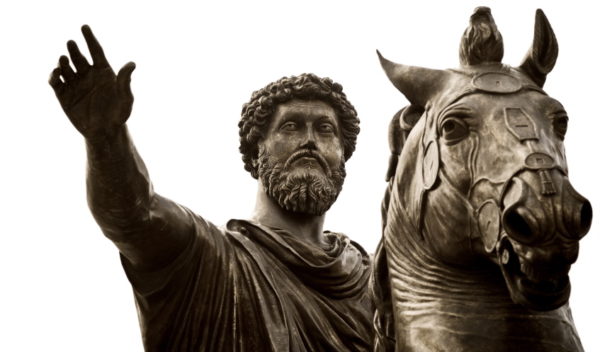
Long before our time, people would gather and discuss philosophical issues such as how to live a fulfilling and virtuous life. During these times of enlightenment, great thinkers like Locke, Kant, Hume, and Kierkegaard, and philosophers such as Aristotle, Plato, Confucius, and Socrates were laying the foundations for how we think about knowledge, reality, and existence. As an example, and the main focus of this article, Stoicism began with the teachings of Zeno of Citium around 300 BCE and continued for more than 500 years through notable Stoic leaders such as Lucius Annaeus Seneca (Seneca the Younger) (4 BCE – 65 AD), Epictetus (50-135 AD), and Marcus Aurelius (121-180 AD). This philosophy combines lessons from others like Epicurus, Plato, and Socrates but differs in the individuals motives regarding character. In particular, the Stoics believed that to live a truly good life, one must be virtuous in areas such as temperance, wisdom, bravery, and justice. 

Developing Innovators: Science Fiction Beyond the Convention Center

Developing Innovators: Science Fiction Beyond the Convention Center

by Christopher L’Heureux

 Innovation is the lifeblood of success. It feeds our ability to adapt and conquer our environment whether on a battlefield or in a boardroom. The aircraft carrier began its life as an auxiliary scout for the fleet. By the twentieth century, it had evolved into the centerpiece of naval strength through a series of progressive changes. Likewise, Netflix began as a mail-order DVD service that revolutionized itself into a digital streaming empire as the internet expanded. These changes required someone with the ability to see potential and create something new. This begs a question: how can we develop innovators to make our organizations more successful?

 Innovation comes from a creative and inquisitive mind. If we intend to become more innovative, we should start there. One approach is to read more science-fiction. I’m taking a leap here, but bear with me. Science fiction, or just “sci-fi” for us nerdy types, gives the reader a future fraught with problems to ponder. Therein lies its power. Through its conflict, sci-fi shows old things used in new ways; it lays out what has changed and what has remained the same; and finally, it leads us to ask how we got here. When we think critically about these characteristics, we find a method to improve our ability to innovate. 


A Platoon Leader’s Takeaways from the Anti-Extremism Stand-Down

A Platoon Leader’s Takeaways from the Anti-Extremism Stand-Down

by Jack Hadley

On March 19th, the DoD-wide Anti-Extremism Stand-Down chain-teaching came hurtling down from echelons on high. For me personally, I saw this cascade come from U.S. Army Europe and Africa (USAREUR-AF) down to the 173rd Airborne Brigade, to 1-91 Cavalry Regiment, and finally to 2nd Platoon, Comanche Troop—within the span of two days. Immediately after receiving the squadron-level training, my platoon sergeant and I were required to brief our platoon. As mandated by Secretary of Defense Lloyd Austin, it was the only priority that day.

The training went well. Honestly, better than I thought it would under the circumstances. Given the perpetually urgent task-lists facing Army units around the globe, it is understandable that many viewed the stand-down as simply “check the block” training or a distractor on the operational training calendar. However, I argue that this training was absolutely necessary and should be the beginning, not end, of our efforts to prevent violent extremism in the ranks.

When Unpopular Decisions Lead to a Better Culture

When Unpopular Decisions Lead to a Better Culture


by Mike S. Burke

On his blog, author James Clear talks about “Keystone Habits,” habits that will act as the foundation for other positive habits and translate into a better overall lifestyle.  However, I submit not all keystone habits are positive. For the purpose of this article, I would like to focus on these negative keystone habits and how they can act as the foundation for other negative habits to take root and corrode culture. As we explore this premise, ask yourself, ”what keystone habits are bringing my organizational culture down?” What effects are they having that individuals do not see or understand? For many,  these habits may bring satisfaction and even be part of the organization’s identity. I’ve noticed after 22 years that some of these habits prevent units from maintaining a positive culture.. So when we identify them, what do we do? 

How We Evaluate Physical Training

How We Evaluate Physical Training

by Alex Morrow

Was that a good workout? If it was, how do you know? If you were to ask these questions to many of our military leaders, they would tell you that if you walk away sweaty, tired, and sore, you’ve had a good workout. To paraphrase a strength and conditioning mentor of mine, Mark Taysom, if those are the criteria, I can give you the fastest workout of your life. Meet me in the sauna at 0200 and I’ll punch you in the face. You’ll be sweaty because you’re in a sauna, you’ll be tired because it’s the middle of the night, and you’ll be sore because you just got punched in the face. Mission accomplished, right?

Wrong. The issue here comes down to using measures of performance (MOP) when, in actuality, we should be using measures of effectiveness (MOE). 

Do You Have a Mentoring Habit?

Do You Have a Mentoring Habit?

by Aaron W. Childers

When most people choose a profession, they spend some time looking at their strengths (and weaknesses) and how their personality best fits into that chosen profession. For example, you may find your gregarious nature is a great fit for sales, or your inclination towards physical fitness nests well into the demands of military service. Even in the most ideal circumstance, in which your chosen profession is closely aligned with your natural interests and talents, there are still some skills that require intentionality and practice. This is the difference between playing baseball recreationally and being an elite professional athlete. Some skills are so critical to the profession that they require regular attention, even if they come naturally.  Mentorship is one of these skills; to truly be mastered it must become a disciplined and habitual process.

I used to take mentoring for granted. I liked staying in touch with people, so why would I need to work at it? Keeping contact with friends and mentors from duty stations past came naturally to me. I even considered being intentional about maintaining contact a counterintuitive idea. After all, these were people I enjoyed interacting with. Why would I need to practice this or make it a discipline? However, I learned by not putting an emphasis on mentoring as a professional skill, my contact was sporadic and undisciplined. I eventually realized that mentoring is so intertwined with leader development, it must be ingrained as an intentional habit.

Leadership Lessons for a Successful Command

Leadership Lessons for a Successful Command

By Timothy Russell 

Throughout my time in command, I faced numerous leadership challenges both tactically and while in garrison. I’ve experienced everything from minor to major UCMJ  actions through the unfortunate situation of dealing with the loss of a soldier within my  formation. While I recognize every command is different, and every organization has its unique challenges and expectations, I’m sharing my leadership takeaways from command in hopes of helping others lead well. I provide my insights to help you think about where to start when you arrive in your new position. For those currently in command, this list can serve as an azimuth check on your own organization.

The Thinking Combatant

The Thinking Combatant

Editorial note – This blog post is part of our Scribbles series. If interested in submitting creative content, view our guidelines here or contact Daniel Vigeant at dan@fromthegreennotebook.com.

By Phil Mitten

It was a searing hot and dry day. I still hadn’t acclimatised to the overwhelming heat, and even after four days, I couldn’t believe how intensely bright the sunlight seemed on the desert sand. Sunglasses and shadows were my new best friends. I felt as though the air just wasn’t dense enough, and at 109 F, the temperatures were easily the highest I had ever experienced. If only I was wearing shorts and a shirt instead of combats, body armour, and kevlar helmet.

Camp Bastion’s air strip was a furiously loud and busy place. In the waiting area, it was only too easy to tell whether the soldiers around me were arriving or departing by their facial expressions, their kit and the way they carried themselves. Some pairs of eyes stared a thousand yards away into nothingness. Their minds were further still.