
Broadening…Where do I Start?

Broadening…Where do I Start?


By Justin Magula

Editor’s Note: This post is the last entry in the FTGN Army Broadening Series that we ran from March 15 to April 02, 2021 and is intended to capstone the different facets that were presented throughout. Through this series, our hope is that we have equipped you with the knowledge and tools to make informed decisions when deciding your future broadening assignment.   

A few years ago, I came to a career crossroads. Like many other junior Army officers, I wanted to explore other options after completing my key development assignment as a captain. I finally chose to change career paths after conducting extensive research. In the process, I learned a lot about the different career choices that the Army affords its officers.

Army officers can follow a few general career paths. Aside from following jobs in their current branch, officers can switch to a functional area or pursue broadening assignments. However, it is important to note pursuing these options can have significant personal and professional implications.  

The Army offers many excellent opportunities, but officers do not always know what is available. It can be challenging to find and sort through the wealth of information. The many options can easily overwhelm junior officers as they shape their future career paths. 

For those wondering where to begin, fear not!

This guide will help prospective candidates understand the different types of broadening assignments. It will also provide advice about finding more information for those preparing to make this big decision. 

Strategic Broadening in the JCS Internship

Strategic Broadening in the JCS Internship

Editor’s Note: This post is part of the FTGN Army Broadening Series that we’ve extended to run from March 15 to April 2, 2021. Each day, we will publish new insights into the Army’s various broadening assignments, starting March 15th, 2021 with an overview of AIM 2.0 and a discussion on how to educate others on assignment selection criteria.

An Unthinkable Opportunity; An Invaluable Experience

By Doug Meyer and Riley Kennedy

  “At the Pentagon, colonels fetch the coffee,” or so the saying goes. This idiomatic – and admittedly hyperbolic – expression is intended to set expectations for the level of rank “in the building.” It’s also a useful check on ego for those leaders transitioning from brigade-level command to a massive staff where even colonels nug on products. This is a useful backdrop for the strategic broadening experience that is the JCS/OSD/ARSTAFF internship. It offers post-KD captains/pre-KD majors the opportunity to gain insight and experience in national level policymaking to then go back to the force and connect the operational bridge between strategy and tactics.

The Army has an array of broadening opportunities available. Each program offers benefits and the chance to learn and grow. The key is to know yourself, clarify your goals, identify your capability/experience gaps, and then match the right program to fit those needs. There are a myriad benefits to the Joint Chiefs of Staff/Office of the Secretary of Defense/Army Staff Internship. You are far from a “coffee fetcher.”

The JCS Internship – as it is colloquially shortened in name – is a Broadening Opportunity Program (BOP) for post key development (KD) captains. It is a 3-year program with one year spent at Georgetown University earning a master’s degree in policy management, a year on the Joint Staff or OSD Staff, and then a year on the Army Staff.

Broadening My Perspective: Thoughts from a MGJW Fellow

Broadening My Perspective: Thoughts from a MGJW Fellow

By Steve Hojnicki

Editor’s Note: This blog post originally appeared on the William & Mary’s Raymond A. Mason School of Business Full Time MBA blog in March 2019 and has been republished with permission.

This post is part of the FTGN Army Broadening Series that we are running from March 15-30, 2021. Each day, we will publish new insights into the Army’s various broadening assignments, starting March 15th, 2021 with an overview of AIM 2.0 and a discussion on how to educate others on assignment selection criteria.  

The decision to go back to school mid-career in any profession is a hard one to make. For me, this meant leaving a position I was thriving in, on a team that I was deeply committed to, in order to pursue an advanced degree. When I reflect on my thought process which ultimately led to pursuing an MBA at the Mason School, and the experience I have had thus far, I can undoubtedly say this program is truly special.

Broadening as a Small Group Leader: Teaching Your Peers

Broadening as a Small Group Leader: Teaching Your Peers

Editor’s Note: This post is part of the FTGN Army Broadening Series that we are running from March 15-30, 2021. Each day, we will publish new insights into the Army’s various broadening assignments, starting March 15th, 2021 with an overview of AIM 2.0 and a discussion on how to educate others on assignment selection criteria.

By David Beaumont

In May 2019, I relinquished Company Command and moved to Fort Huachuca, Arizona. I was assigned to take on the challenging responsibility of becoming a Small Group Leader (SGL) and Instructor at the United States Army Intelligence Center of Excellence Military Intelligence Captains Career Course (MICCC). Leaving the historic 25th Infantry Division “Tropic Lightning” at Schofield Barracks, Hawaii, I was eager to teach the next generation of Military Intelligence Professionals, and share successes and failures from my three year tenure in the Pacifc. However, I was a little apprehensive at the idea of teaching students who wore the same Captain (CPT) rank as me because I would be required to lead and teach my peers.

When learning a new skill, training on the latest piece of equipment, or keeping up to date on doctrine, where or who do you turn to first? Do you go straight to your boss or supervisor for the answer? Most people prefer to consult their peers based on reputations of experience and knowledge to learn and build new sets of skills. In order to expand professional development, learners must have the intellectual curiosity and willingness to search for answers, make mistakes, challenge ideas, and speak up freely. This environment creates a space where the learner feels comfortable conversing with their peers without a sense that their boss is evaluating their performance while they are learning.

OCT Duty: Tactical Broadening

OCT Duty: Tactical Broadening


Editor’s Note: This post is part of the FTGN Army Broadening Series that we are running from March 15-30, 2021. Each day, we will publish new insights into the Army’s various broadening assignments, starting March 15th, 2021 with an overview of AIM 2.0 and a discussion on how to educate others on assignment selection criteria.  

By Eric Shockley

When I was assigned as an Observer/Coach-Trainer (O/C-T) at the combat training center (CTC) at the Joint Readiness Training Center (JRTC), I initially struggled to understand how such an assignment could be considered “broadening”, given my outsider’s perception of what was surely endless drudgery in rotation after rotation.  Eventually I realized the opportunity that I had been handed, and enjoyed my time at Fort Polk, LA.  I hope that relating my experience as an O/C-T can help show the value of such an assignment to those who might otherwise dismiss the opportunity of an assignment to a CTC.

ROTC Broadening: Developing the Next Generation of Leaders

ROTC Broadening: Developing the Next Generation of Leaders


Editor’s Note: This post is part of the FTGN Army Broadening Series that we are running from March 15-30, 2021. Each day, we will publish new insights into the Army’s various broadening assignments, starting March 15th, 2021 with an overview of AIM 2.0 and a discussion on how to educate others on assignment selection criteria. 

By Nadi Kassim and Joe Swain

Looking at our assignment slates was one of the most invigorating moments of our Army careers. For the first time, we were presented with a wide set of broadening assignments outside of our specific branches. As a senior Captain, broadening opportunities are the final frontier before assuming field grade roles when, among a litany of tasks, officers are responsible for creating leader development programs, operating at the operational and strategic levels to support tactical units, and engaging a wide array of external stakeholders. The APMS role provides an environment to develop these skills while providing the added benefit of true work-life balance. Although all the positions have their advantages and disadvantages, the ROTC Assistant Professor of Military Science (APMS) assignment is an immensely rewarding and true broadening experience.


USMA Broadening: Tactical Officer

USMA Broadening: Tactical Officer

Editor’s Note: This post is part of the FTGN Army Broadening Series that we are running from March 15-30, 2021. Each day, we will publish new insights into the Army’s various broadening assignments, starting March 15th, 2021 with an overview of AIM 2.0 and a discussion on how to educate others on assignment selection criteria. 

By Josh Bowen and David Weart

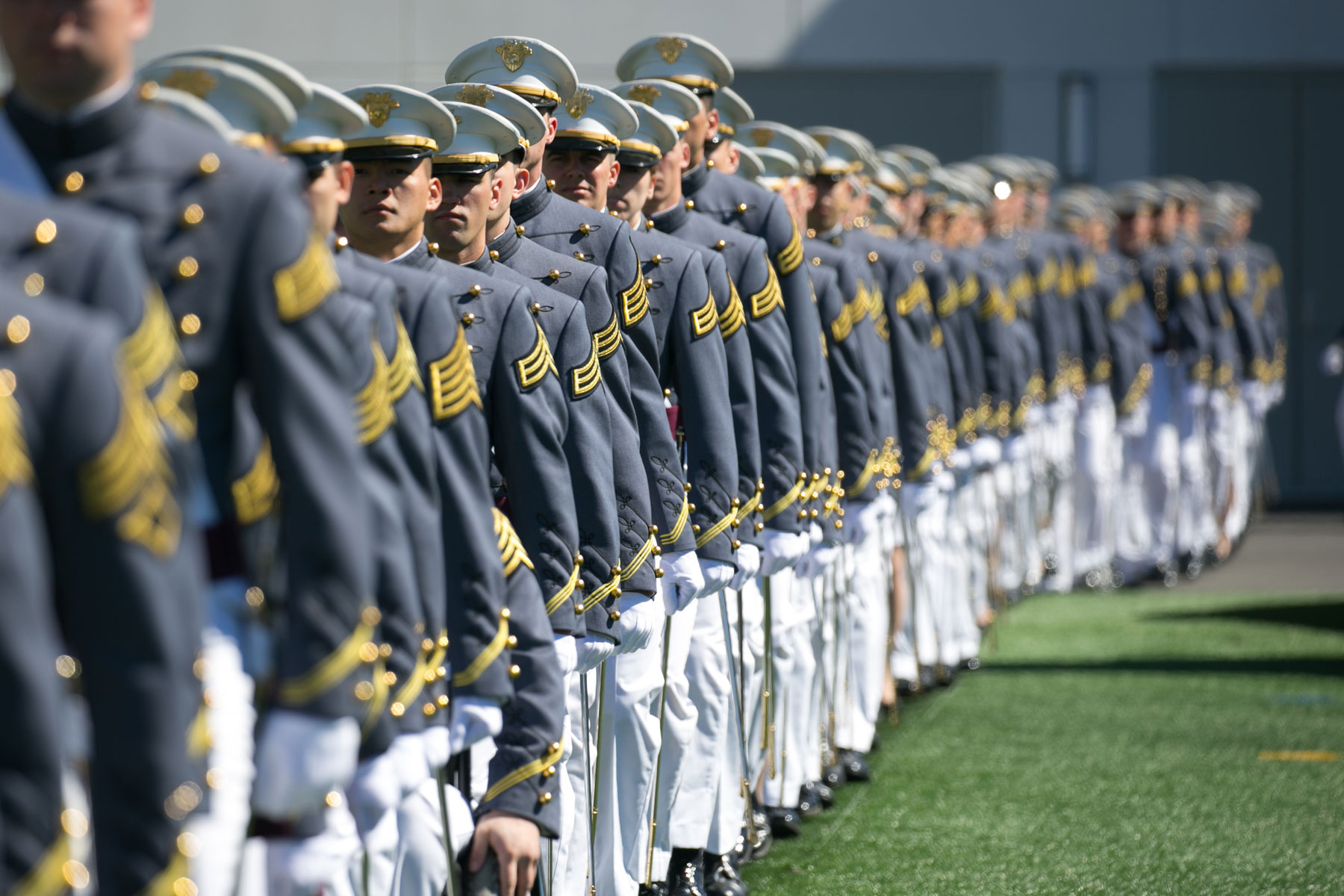
Not to start off overly dramatic, but we are confident in saying that being Tactical Officers (TAC) at the United States Military Academy at West Point, NY has made us better officers, leaders, spouses, parents, and people. 

This experience is a key highlight of our 10+ year careers and equipped us to lead and develop others better both here at West Point and beyond as we re-join our operational formations. 

But it is a unique experience, for sure, so we want to offer a summary of what this job is, why it’s absolutely something you should consider doing, and why it is worth your time. 

Inspector General: A Prime Broadening Experience

Inspector General: A Prime Broadening Experience

Editor’s Note: This post is part of the FTGN Army Broadening Series that we are running from March 15-30, 2021. Each day, we will publish new insights into the Army’s various broadening assignments, starting March 15th, 2021 with an overview of AIM 2.0 and a discussion on how to educate others on assignment selection criteria. 

By Phil Stofanak

For many people, the Inspector General is viewed as a bad staff agency or a bunch of hall monitors who are out to get commanders in trouble. The goal of this article is to dispel that notion and maybe even convince some of you to pursue IG as a broadening opportunity. For me, IG was a rewarding broadening experience that taught me skills I will take with me into my next command of a Security Force Assistance Company and in other future assignments. In this article, I will explain what the school is like, what I learned and did in my two plus years as an IG, and why it was such a great broadening experience for me.  I will also go over some of the benefits to the job and why it makes sense for someone to seek out the IG positions as a broadening experience. 

IG was not even on my list when branch offered me a position as a Deputy Inspector General. However, it was the duty station I wanted and I figured it would be something different. The fact that I knew nothing of the IG system before I took the job is why I am so eager to speak about such a great broadening experience.    

Duty, Honor, Country: Broadening Opportunities at the U.S. Military Academy

Duty, Honor, Country: Broadening Opportunities at the U.S. Military Academy

Editor’s Note: This post is part of the FTGN Army Broadening Series that we are running from March 15-30, 2021. Each day, we will publish new insights into the Army’s various broadening assignments, starting March 15th, 2021 with an overview of AIM 2.0 and a discussion on how to educate others on assignment selection criteria. 

By Raymond A. Kimball

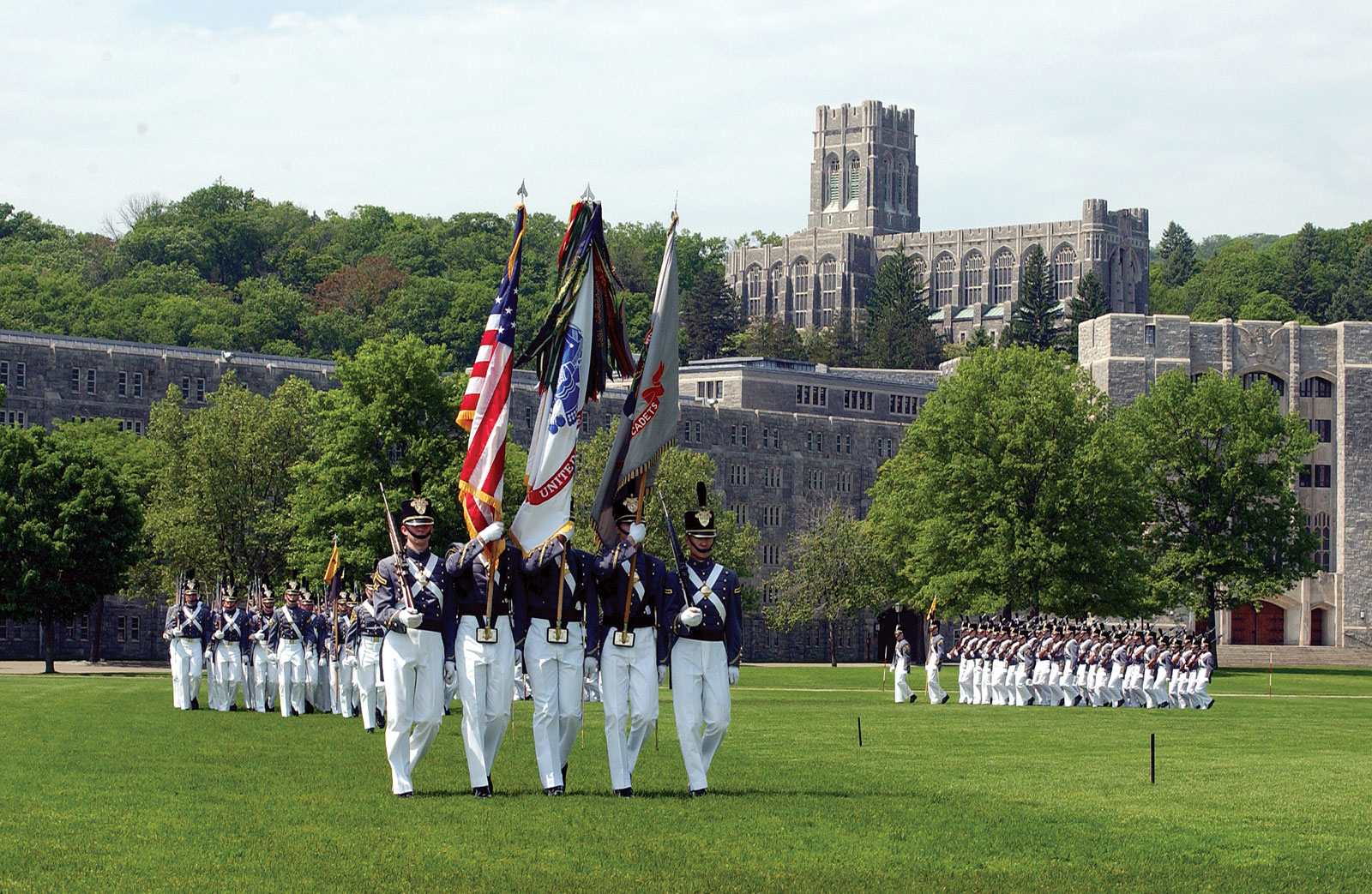
If you’re an officer who wants to earn a graduate degree, shape future officers, and expose yourself to a side of the Army many never see, a broadening assignment at the U.S. Military Academy at West Point (USMA) may interest you.  USMA’s unique mission, “to educate, train, and inspire the Corps of Cadets so that each graduate is a commissioned leader of character committed to the values of Duty, Honor, Country and prepared for a career of professional excellence and service to the nation as an officer in the United States Army,” requires a diverse faculty committed to developing young leaders. We are teachers, role models, mentors, institutional leaders, scholars, and engaged members of the community. Over half of that faculty comes from military officers on broadening assignments who then return to the Army as our “second graduating class.” We call them our “second graduating class” due to the development they receive during graduate school and at West Point that provides them the additional skills, knowledge, and experience they need to be the next generation of senior leaders for the Army and nation.

Congressional Fellowship: Broadening at the Intersection of the Army and Congress

Congressional Fellowship: Broadening at the Intersection of the Army and Congress

By Jeremy Tillman

The Army Congressional Fellowship is a unique opportunity to gain strategic perspective and hone your understanding of legislative affairs. Unfortunately, the perception that broadening assignments are negative propagate in small Army circles today. Many leaders claim that company and field grade officers should avoid taking professional risks with timelines. Instead, they should follow a well-trodden path of tactically focused assignments. But does this path help develop future operational and strategic leaders? In George Fust’s clever and recent article, Broadening Assignments Are The New Black, he contends “In an increasingly complex world, the Army needs well-rounded leaders who can leverage a broad array of experiences to develop solutions.” A leader may dissuade you from pursuing a broadening opportunity for a number of reasons that may include professional timelines, personal goals, or unit requirements. However, the Army Congressional Fellowship is a unique opportunity that broadens leaders through advanced civil schooling, teamwork at the strategic level of government, and experience working on relevant defense legislation that impacts the Army. 

Educate, Train, Inspire: West Point Broadening Opportunities

Educate, Train, Inspire: West Point Broadening Opportunities

Editor’s Note: This post is part of the FTGN Army Broadening Series that we are running from March 15-30, 2021. Each day, we will publish new insights into the Army’s various broadening assignments, starting March 15th, 2021 with an overview of AIM 2.0 and a discussion on how to educate others on assignment selection criteria. 

By Zachary Griffiths

West Point instructors educate, train, and inspire the next generation of Army leaders: West Point’s more than 4000 cadets. This post focuses on positions at West Point for junior military faculty, generally post-KD captains and majors. Teaching at West Point typically lasts 3-6 years and involves three pieces: acquisition of a graduate degree, teaching, and then intermediate level education (ILE). Teaching at West Point is not just for former West Point graduates. The Academy seeks a diverse pool of instructors from all commissioning sources and backgrounds. 

The Responsibility of Preparedness: Choosing Broadening Assignments That Will Make You a Better Officer

The Responsibility of Preparedness: Choosing Broadening Assignments That Will Make You a Better Officer

Editor’s Note: This post is part of the FTGN Army Broadening Series that we are running from March 15-30, 2021. Each day, we will publish new insights into the Army’s various broadening assignments, starting March 15th, 2021 with an overview of AIM 2.0 and a discussion on how to educate others on assignment selection criteria. 

By Aaron Childers

“With great power comes great responsibility.” Okay, so maybe that’s a quote from Spiderman, but if you’ve been in the Army long enough, you’ve also heard the saying “You are your best career manager.” As Army officers find themselves using the AIM 2 marketplace for virtually all assignments, these two ideas are more true than ever before. Following your key development, or KD, time as a captain and a major (usually company command or XO/S3 time), you have a window to pursue a broadening assignment.  

However, choosing where to spend this dedicated time broadening yourself is something of a “Spiderman” moment. You have tremendous power to choose your next assignment – you may, in fact, have an AIM2 marketplace with hundreds of widely-varied options.