By Joe Byerly
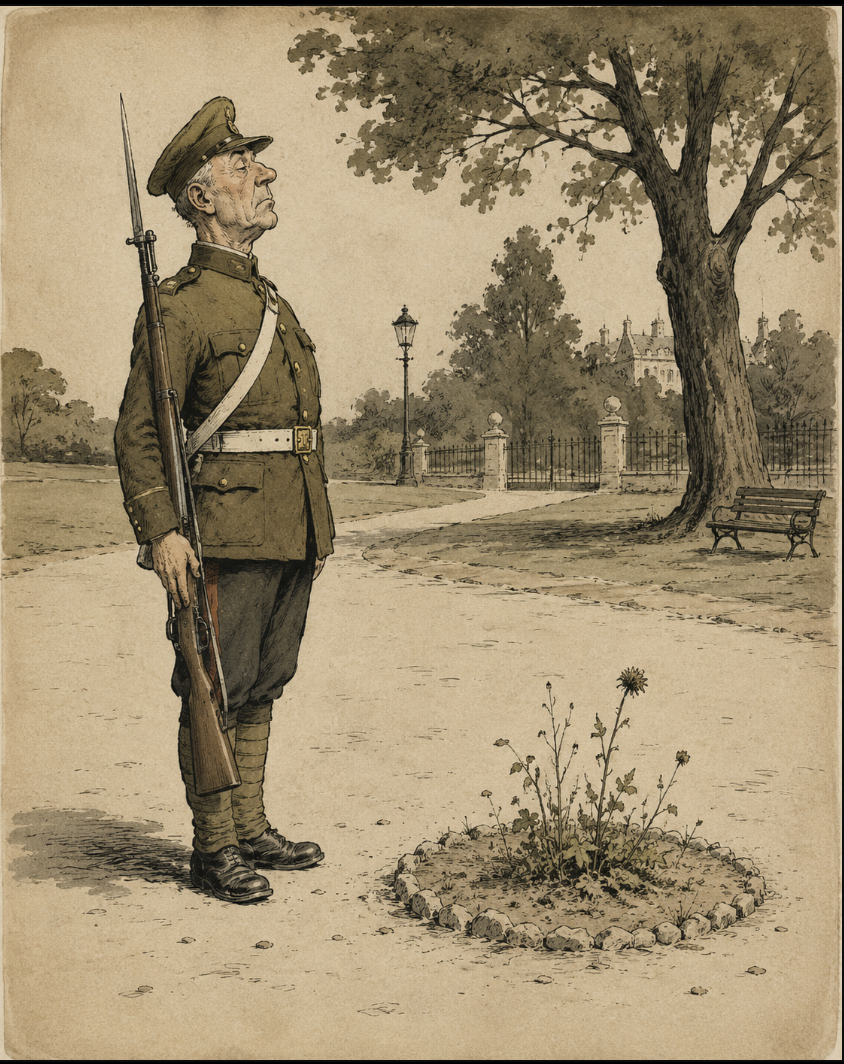
One of the Czars of Russia, walking through his park, came upon a sentry standing guard over a small patch of weeds. Curious, the Czar asked what he was doing there.
The sentry didn’t know. He simply replied that he had been ordered to that post by the captain of the guard.
So the Czar sent his aide to ask the captain. The captain’s answer wasn’t much better. The regulations, he said, had always called for a sentry at that particular spot.
Now fully intrigued, the Czar ordered an investigation. No one at court could remember a time when there hadn’t been a sentry standing there. No one knew what he was guarding.
Finally, the archives were opened. After a long search, the mystery was solved.
The records showed that Catherine the Great had once planted a rose bush in that very spot. A sentry had been posted to ensure no one trampled it.
The rose bush died. But the order remained.
And so, for a hundred years, men stood guard over a patch of weeds; watching something that no longer existed.
I recently came across this story in a 1934 essay by Walter Lippmann, and it made me reflect on the dead rose bushes in my own life.
Our dead rose bushes are the habits, behaviors, and beliefs that once made sense. Maybe they even served us well. But over time, the conditions changed. Yet, we keep standing watch.
Maybe it once made sense to keep people at an arm’s length because of the environment you grew up in, but now that distance keeps you from the relationships you actually want.
Maybe you needed to do everything yourself because, for a season, you were the only person on the team. But now you’re leading a team, and that same instinct is holding everyone else back.
Maybe you learned to keep your head down because speaking up once came with consequences. But now your silence is costing you opportunities, influence, and a whole lot of anxiety.
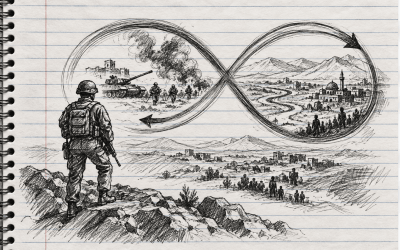
It’s not easy to identify our dead rose bushes. They’re a part of our operating system, working in the background. We automatically put our helmet on, grab our weapon, and assume our post.
If we’re not careful, we can spend years—maybe even decades—standing guard over something that no longer exists.
It’s probably one of the reasons I place such a high value on journaling. It gives me a way to capture these patterns before they disappear back into the background. It forces me to slow down long enough to notice the old orders I’m still obeying, the dead rosebushes I’m still guarding, and the patches of weeds I keep showing up for.
What am I still doing out of habit rather than purpose?
What beliefs am I holding onto that no longer serve me?
What routines have I never stopped to question?
These are the questions that sometimes come to mind as I’m capturing my days on paper. It’s the voice that finally cuts through the noise and asks: Why the hell do I keep doing this?
Even if journaling isn’t your thing, it’s worth slowing down every now and then to look around and ask whether the rosebushes we’re guarding are still there, or whether we’re wasting time and energy protecting patches of weeds.
This post originally appeared in The Sunday Email newsletter
Joe Byerly is a retired U.S. Army Lieutenant Colonel with 20 years of service, including tours in Iraq and Afghanistan, and command of a cavalry squadron in Europe. He earned numerous prestigious awards, including multiple Legion of Merits, Bronze Stars, the Purple Heart, and General Douglas MacArthur Leadership Award. In 2013, Joe founded From the Green Notebook.
A passionate advocate for self-knowledge through reading and reflection, he authored The Leader’s 90-Day Notebook and co-authored My Green Notebook: “Know Thyself” Before Changing Jobs, a resource for leaders seeking greater self-awareness. If this post resonated with you or sparked any questions, feel free to reach out to him at Joe@fromthegreennotebook.com.