By Larry Harris
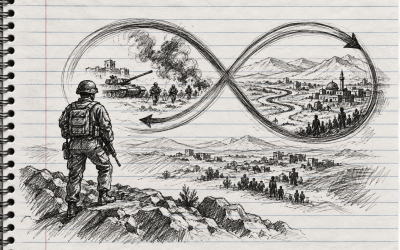
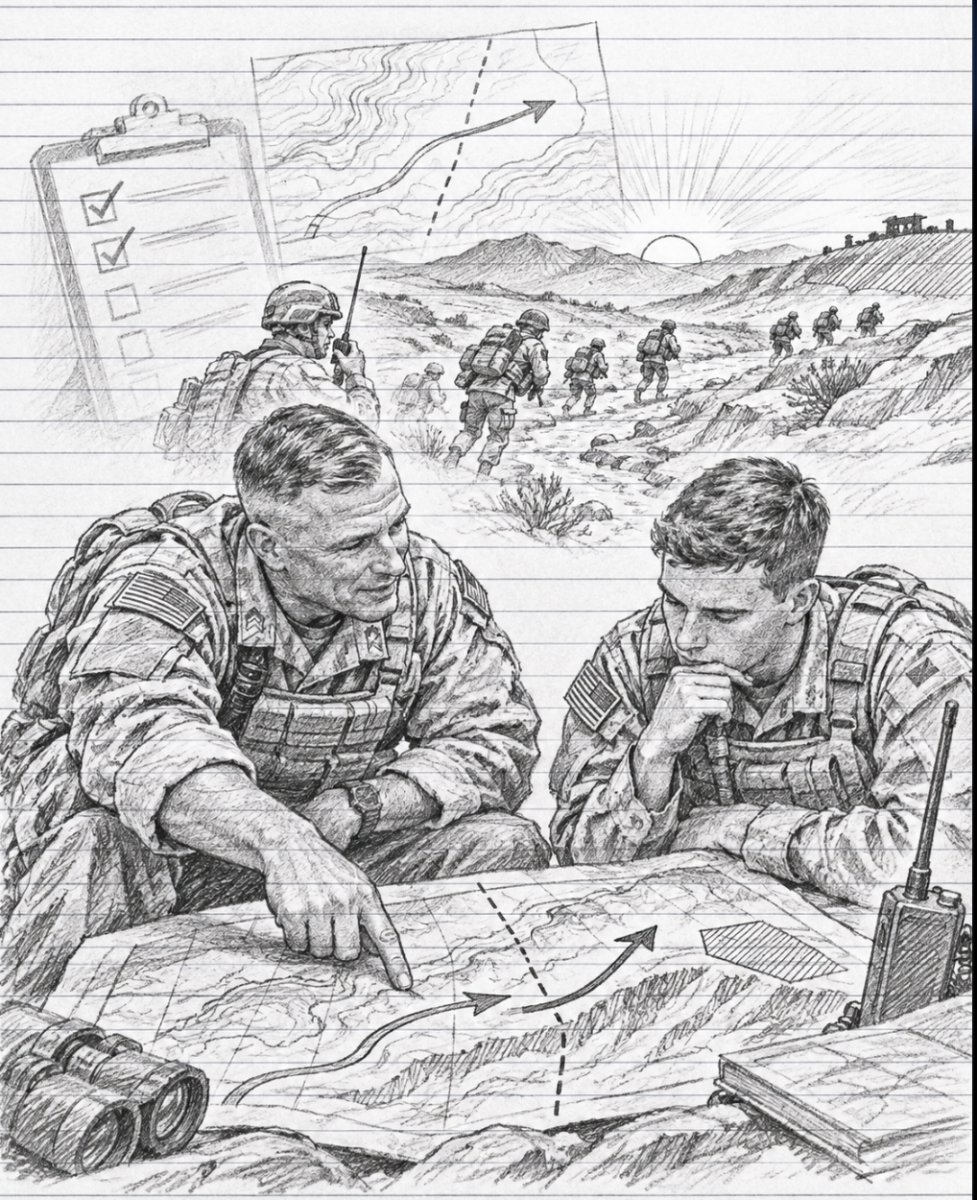
During a grueling rotation at the National Training Center in 2011, I watched an exposed enemy flank materialize during a dawn movement to contact. As a young Platoon Leader, I identified a clear opportunity to maneuver my squads through a dry wash and take the position from the rear. Doing so, however, meant pushing nearly 400 meters beyond our coordinated phase line.
I froze. I keyed my handset, called my Company Commander, and waited for permission. By the time the radio traffic cleared, graphics were verified and adjusted, and the authorization came back down, the enemy had repositioned. The window of opportunity had slammed shut, and our eventual assault stalled under simulated direct fire.
My hesitation that morning was not born of laziness; it was born of fear.
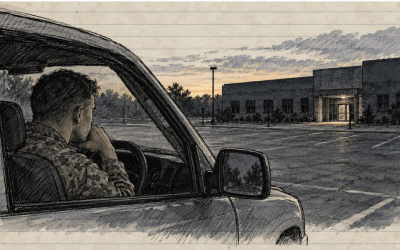
Only months earlier, I had failed the Florida Phase of Ranger School for this exact scenario. Leading a platoon-sized raid, I spotted an opportunity, bypassed a coordination point, and maneuvered my element past our planned limit of advance. In the darkness, our movement triggered a simulated fratricide on the objective. My patrol evaluation was marked unsatisfactory, and I was subsequently recycled at the very end of the phase. I had to make the painful call to my family, some of whom had already begun traveling to Georgia, to tell them I would not be graduating as planned.
That failure taught me to fear the phase line. It conditioned me to prioritize rigid compliance over tactical reality. When I finally reached a real unit, I brought that risk-averse mentality with me, choosing the safety of a checklist over the uncertainty of initiative.
In reality, the phase line I hesitated to cross at NTC was placed on the map to prevent exactly what had recycled me in Florida: fratricide. It was a boundary dividing my platoon from an adjacent platoon in our company. But the tactical reality on the ground was dynamic. That adjacent platoon was far behind, off time and off target, leaving my element effectively alone at the front. The restriction was designed for safety, but I knew the local situation made a collision impossible.
Had I possessed the confidence and the trust of my leadership, I would not have waited on a vertical permission slip. I would have initiated direct, lateral coordination with the adjacent platoon leader, verified their position, and exploited the flank. Instead, bypass coordination was skipped, the vertical chain was gummed up with requests, and the tactical window vanished. We must teach junior leaders how to coordinate horizontally to preserve safety while seizing the initiative, rather than teaching them to wait for the battalion staff to solve their adjacent unit coordination.
If our junior leaders are waiting for permission in our training areas because they fear the evaluator’s red pen, they will die waiting for permission in a contested, peer adversary fight where decision speed is paramount to survival. As a future battalion commander who will soon be charged with senior rating young officers, I am searching for ways to build an organization capable of winning in modern warfare and to ensure my role in their lives is that of a mentor vice merely an evaluator.
The Grader’s Trap
The gravity pulling battalion commanders toward the role of “Chief Evaluator” is immense. Between readiness metrics, maintenance reports, combat training center rotations, and command climate surveys, our operational environment screams for compliance and predictability.
When we approach our subordinate leaders as graders, we condition them to hide friction, avoid tactical risk, and execute only what is explicitly scripted. The evaluator mindset focuses almost exclusively on the immediate outcome of a tactical decision, measuring compliance against rigid checklists and timelines. In this framework, mistakes during training are viewed as indicators of incompetence, and senior leaders frequently step in to direct solutions to ensure immediate exercise success.
Conversely, a developmental mentor focuses on the soundness of the decision-making process under stress. This mindset measures adaptability, speed of recognition, and initiative. By viewing friction during training as an essential developmental data point rather than catastrophic failures, mentors allow junior leaders the breathing room to fail, learn, and adapt. If we do not make this shift, we risk engineering fragility into the very foundations of our formations.
Three Pillars of Developmental Command
Transitioning from an evaluator to a mentor requires concrete, structural adjustments to how we communicate, counsel, and critique our subordinate leaders. This transition is built upon three core pillars.
1. Explicitly Underwrite Tactical Risk
Initiative cannot thrive in ambiguity. Subordinate commanders must know the exact boundary between boldness and negligence before they cross the line of departure. To do this, we must publish clear thresholds in our command philosophy detailing the decisions delegated to the company level, such as departing maneuver corridors or expending Class V reserves, versus those requiring immediate notification.
When a company commander makes an aggressive, well-reasoned decision that fails tactically, we must publicly underwrite the outcome during the After-Action Review. More importantly, we must treat inertia and hesitation as far more detrimental to readiness than a failed, audacious tactical gambit.
2. Replace Directive Control with Socratic Inquiry
When observing a young leader in the field or the motor pool, we must resist the urge to provide immediate tactical answers. Directive command creates dependent subordinates; guided reflection builds intellectual autonomy.
Instead of telling a commander to move their support-by-fire position further south to gain better suppression, we should ask what blind spots their current position presents to their assault element. Instead of ordering them to increase their security perimeter around an assembly area, we should ask how their current disposition would respond if the enemy probed from an adjacent draw. Prompting reflection ensures the junior leader discovers the solution and owns the decision.
3. Redesign the After-Action Review
The standard After-Action Review often turns into a litany of execution errors cataloged by observer-controllers and battalion staff. While the tactical mechanisms certainly matter, the command team’s primary role in the review is to unpack the cognitive dimension of leadership.
We must focus the discussion on information flow, analyzing what the commander perceived at the moment of decision and what noise obscured the critical signal. We must evaluate their risk calculus, discussing what risks they actively assumed, what was mitigated, and what was ignored. Finally, we must analyze intent alignment, determining whether the tactical decision supported the higher commander’s intent, even if it departed from the original concept of operations.
The Litmus Test: The Severed TOC
The true test of command mentorship is not how flawlessly a battalion executes when the commander is in the Tactical Operations Center managing the fight. The real test is what happens when the TOC is destroyed, communications are jammed, and an isolated company commander must make an operational choice in the dark.
If that leader has only been graded for years, they will hesitate, seeking a transmission that will never come. If they have been mentored, coached, and empowered to trust their professional judgment, they will assess the ground, seize the initiative, and fight through the friction.
As I prepare to step into a new leadership role, I am constantly reminded of my own hesitation as a Platoon Leader. I want to build a formation where my subordinate leaders do not fear the phase line. I challenge you to take an honest look at your daily interactions with your junior leaders. Are you grading their performance, or are you building their capacity to fight and win without you?
LTC Larry Harris is an infantry officer currently serving at the Defense Threat Reduction Agency. He has served in various leadership and staff positions across light, stryker, and heavy formations.