
How have blogs, social media, and the internet shaped leadership and leader development in the Digital Age?


How have blogs, social media, and the internet shaped leadership and leader development in the Digital Age?


This post originally appeared on the Strategy Bridge on August 17, 2016
How Everything Became War and the Military Became Everything: Tales from the Pentagon. Rosa Brooks. New York: Simon & Schuster, 2016.
In June 1945, 850 delegates representing 50 nations gathered in San Francisco to start the process of drafting what would eventually become the Charter of the United Nations. This wasn’t some exercise in bureaucratic protocol; this was a desperate attempt by humans to bring about stability to a world ripped apart by war, to draw distinct lines between war and peace, and to keep war inside its box. For the ashes were still smoldering on the continent of Europe, and the war in the Pacific wasn’t yet over. Sixty million of the planet’s sons and daughters perished during World War II with another twenty five million wounded. The work of these delegates and their staffs took two months to complete, and by October 24, 1945 the U.N. officially came into existence. For the last 71 years, the Charter, this international body, and the norms they have established for warfare, have contributed to the prevention of the level of destruction experienced in the early 20th century.


By Zachary Mierva
The cabin was very quiet. A few passengers made phone calls or sent text messages to loved ones. Some were saying their prayers. Others would say they were making peace with the situation. If they were going to die, they said, there was nothing they could do about it, and so they tried to accept it.
Some later told me that they were glad I didn’t give them too many details. That would have made them even more frightened.
It wasn’t until about 90 seconds before we hit the water that I spoke to the passengers.
I wanted to be very direct. I didn’t want to sound agitated or alarmed. I wanted to sound professional.
“This is the captain. Brace for impact!”

From ARMY Magazine, Vol. 66, No. 9, September 2016. Copyright © 2016 by the Association of the U.S. Army and reprinted by permission of ARMY Magazine.
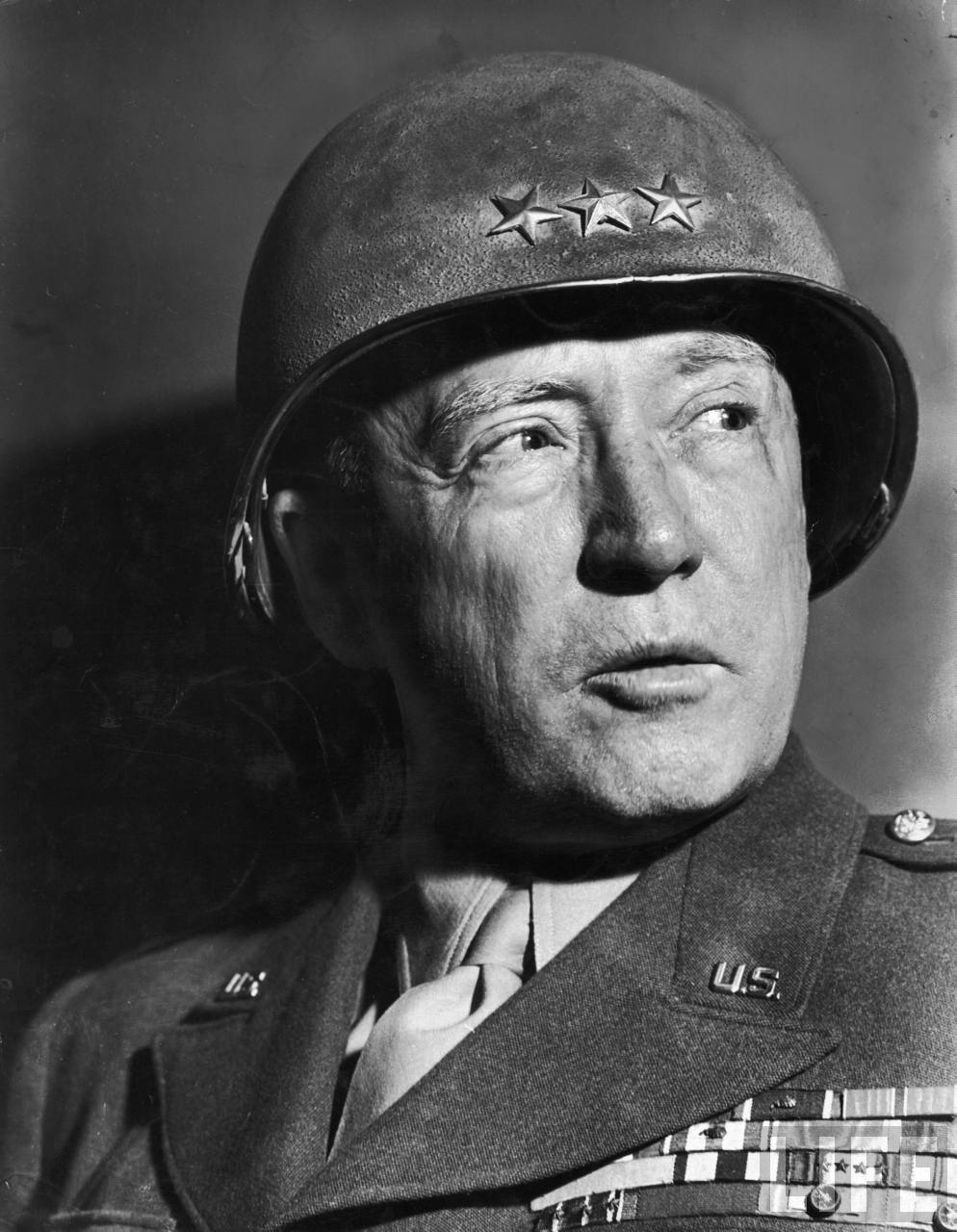
By the end of August 1944, Gen. George S. Patton Jr.’s Third Army had left a swath of destruction across Europe. They had captured or destroyed over 4,300 German tanks, artillery pieces and vehicles while losing fewer than 500 of their own tanks and artillery. Even the death toll was lopsided. As of Aug. 23 of that year, the Germans had lost 16,000 soldiers, killed at the hands of III Corps, compared to approximately 2,000 U.S. service members killed in action.
Patton’s rapid 500-mile trek across Europe can be summed up in one word: Attack! The speed at which he moved left the Germans confused, and it paved the way for the Allies’ race to the Rhine.


In 1920, as commander of 3rd Squadron, 3d Cavalry, then Colonel George S. Patton Jr. held a series of sixteen lectures in which we he imparted the lessons he had learned from a mixture of self study and his own experiences in World War I to the junior officers in his formation. When I think about these professional development sessions, I imagine Patton standing in front of a room full of officers with his notecards in hand, and the young captains and lieutenants scribbling furiously in their notebooks. Almost 100 years later, this method of imparting knowledge to the next generation of military leaders hasn’t changed much in our organizations.


By Jim Greer
After 15 years devoted to low intensity conflict in the form of counter-insurgency, counter-terrorism and foreign internal defense the U.S. military, and more specifically the U.S. Army, is now focused on restoring the lost capability to conduct mid-to-high intensity maneuver warfare. Restoring capabilities for maneuver warfare is only possible through the leader development, training and cultural adaptation that enables leaders, Soldiers and organizations to think, plan, analyze, decide, communicate and act effectively in combat situations that are incredibly complex, conducted at extremely high tempos and far more lethal than the operations of the last fifteen years. Recognizing that future maneuver warfare will not be the same as that of the latter half of the 20th Century, the following reading list is offered as a start point for those who wish to educate and prepare themselves to lead our Army in preparing for and if necessary conducting large-scale maneuver warfare in the future. Each of these books shaped my own thinking and understanding about maneuver warfare and enabled me to prepare leaders, Soldiers and units to plan and conduct successful combat operations employing maneuver warfare in Desert Storm and Operation Iraqi Freedom.


By Joe Byerly
Last summer, I wrote a short article about promoting reading by simply talking about it. I believe the best way to encourage leaders to pick up a book is through conversation, not mandatory reading assignments. So this year, I thought I would continue the tradition by asking folks from around the national security community to share what they are reading this summer.
I love this list because it’s a mix of history, fiction, poetry, and current events. With vacations upon us, I encourage you to check out these books, and grab one for yourself as you prepare to hit the beach!


By Joe Byerly
Company Command and S3/XO time are two critical seasons in an officer’s career, and one of the keys to being successful is to show up prepared. Below are three resources that leaders can tap into to help prepare ahead of time for these positions:


