
By Colonel Laura Weimer
The burden of command is heavy. In early 2023, I felt that immense weight of responsibility coupled with personal pain and grief. Seven months into command of a division Headquarters Battalion (HHBN), one of my company commanders took his life and set our unit and each of us on a challenging path to make sense of where to place our time and energy.
A few years removed, I can see the situation’s complexities more clearly. In the wake of such loss, a commander’s postvention requires a conscious balance between caring for people while maintaining organizational momentum and readiness. It means accepting imperfection while working to mitigate both immediate and long-term harm. This is a glimpse at how we navigated that tragedy.
Situation: A Tragic 4-day Weekend
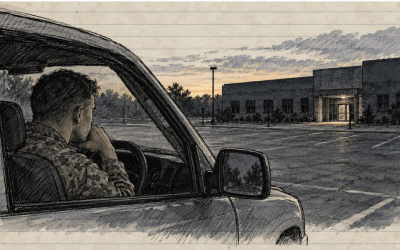
Two weeks after holiday block leave, we lost a prominent leader in our battalion and division headquarters: a senior CPT, our Headquarters and Support Company (HSC) commander. On Sunday of the four-day weekend, the police confirmed he was deceased within his home. I made immediate phone calls pacing outside his house in the dark, culminating with the tragic notification to his mother.
Tuesday morning, I made the dreaded notification to the Battalion after the long weekend. At that moment, our only focus was the personal support to Soldiers of every rank, with Behavioral Health providers and Chaplains. Staff sections and platoons huddled in the dark after hearing the news, emotionally leaning on each other. As we processed his loss, we would speculate and try to piece together the challenges he was facing, trying to understand how he could believe that his life was not worth living.
A Complex Situation and Necessary Decisions
In that moment and for some time after, we had to assess a complex situation and make the best possible decisions acknowledging their significant implications. We led much more than a formal organization based on structure and technology; we had a responsibility to care for and cultivate the full potential of our people. We recognized the potential effects of human psychology, cultural and social dynamics, and professional motivation. We considered immediate, cumulative, and long-term effects in the tragedy’s aftermath. Every decision required us to navigate the competing pressures of emotional risk with an inflexible training calendar and organizational expectations.
Specialists warned us of suicide contagion, where one incident could cause a ripple of others. Our commander had been a prominent and visible leader; would others see his actions as a way to deal with their own despair and challenges? Would this trigger difficult memories and cause them to question how they would continue if their company commander could not? How would each Soldier and leader – with significantly different life and military experiences – process individually and collectively?
Our structured and demanding training requirements yielded little schedule flexibility. The Division HQ faced a major Command Post Exercise (CPX) only two weeks away, soon followed by a Corps Warfighter Exercise (WFX). The calendar was packed. The staff was amid Military Decision-Making Process (MDMP) sessions and orders production. Our companies were making final supply, maintenance, and personnel preparations. We were building the Division’s readiness upon lessons learned from our NTC rotation, and the ongoing Russia-Ukraine war provided a sense of urgency for Command Post (CP) survivability rehearsals. We don’t know if the pressure of the unit’s readiness and pending training exercises contributed to our commander’s mindset that led to his death, but it was at the forefront of my mind for all those he left behind.
The loss triggered doubt in our purpose and daily motivation. A senior leader’s suicide was a shock to our training momentum, and it caused us to question whether this training progression should be our priority. Our psychological rewards and incentives became disconnected. The drive to excel in our upcoming exercises became irrelevant next to the fragile appreciation we had for life and our teammates.
The company’s structure amplified the impact of our commander’s loss on the organization’s training proficiency and clean lines of communication. HSC comprised half the division staff, the battalion staff, and the maintenance section. The company commander was responsible for the readiness and well-being of almost 300 officers, warrant officers, NCOs, and Soldiers, and also led the Division’s Tactical Command Post (DTAC). With his tactical experience, intelligence, communication, and organization, he had been instrumental in establishing and refining our Battalion’s Tactical Standard Operating Procedures (TACSOP) at NTC. His loss created functional holes in our TACSOP and caused us to pause and question the steps we’d become familiar and proficient with.
Losing a company commander created overload, disruption, and confusion in daily operations. Our organizational structure had been dismantled. The company commander was a lynchpin in operations as a leader, peer, and subordinate. Our routines were disrupted. Alternate people attended meetings; communication required additional actors, weighing them down beyond their traditional roles; meetings were dampened by the continuous processing of grief. Elements of formal relationships disappeared. Where the commander previously made decisions, provided support, or resolved conflicts, he left a void. Additional weight fell on his 1SG and Executive Officer, who were grieving their close colleague and lacking a first-line leader to provide purpose, direction, and motivation. He was also my company commander. He was one of three commanders I was personally responsible for guiding, developing, and challenging. Every step I took was shadowed by grief and pain.
These overlapping pressures informed every postvention decision that followed.
Taking Thoughtful, Yet Imperfect Steps Forward
We led by accounting for the situation’s delicate complexity and encouraging our organization and people forward. We combined technical, conceptual, interpersonal, and adaptive tools, continuously assessing the organization’s training proficiency, our own biases and perspectives, and social dynamics. We accounted for critical timing and cumulative effects, and recognized that individuals may need to step away to grieve.
To restore meaning, I reiterated and leaned into the vision I had set for the battalion when I took command: “Strong people, strong teams, and ownership.” Understanding the importance of a vision to provide purpose, direction, and motivation, I attempted to ground us in a familiar element while reframing how we could approach this aspirational state through actions and engagements. I leaned on our collective identity for strength and tried to inspire us toward organizational success as a form of healing and legacy.
To reduce psychological and emotional risk, we communicated genuinely and deliberately across the ranks of the battalion. Despite the unique leadership structure and range of ranks, I felt it important to be accessible, taking a more informal approach to soften some of our pain and provide connection and comfort. Far from serving as the primary counselor, my periodic conversations with individuals and groups connected us through vulnerability and trust and aided in our processing. Eventually we shared stories and moments to celebrate his memory and his impact. I maintained responsibility for moving the organization forward in its mission and made tough decisions to do so, but I talked with privates, staff sergeants, warrant officers, majors, and generals about how they were feeling. Conversations up to a year later convinced me the investment had been worthwhile.
We also created opportunities for individual and group processing. We intentionally held his memorial ceremony before our CPX to take the first steps toward closure. Senior leaders directed and made space for me to see the Division Psychiatrist, which I mirrored with my field grades and company-level leaders. Beyond the immediate weeks and months after his death, we accounted for extra leave and counseling sessions. Decompression was important, and we ensured our leaders had space and support to unplug and take leave, me included.
Albeit difficult, painful, and amid some criticism, we moved the organization forward to increase readiness. We slowed the work pace slightly, but not by much. We still conducted every exercise on the calendar. To some it seemed like we never stopped. We redistributed tasks as necessary to support individuals or sections. The Chief of Staff shortened MDMP sessions and ensured the staff didn’t spend excessive weekend hours preparing. And with the Brigade Commander’s concurrence, I put a new captain in command of HSC on the eve of our CPX. I knew it would be hard for everyone involved, and some would claim it was too soon to replace the commander we lost. The new commander was the right leader, with strong emotional intelligence, to observe and learn through the CPX, and provide the technical structure and leadership the unit needed.
I received mixed feedback in the aftermath of our commander’s suicide. Negative comments on the command climate survey criticized our apparent disregard for people’s pain and psychological stress. Others blamed his suicide on the unit’s training tempo, which we then continued without pause after his death. However, others verbally supported the delicate nature by which we moved on and showed their appreciation in the conversations and connections we fostered. We continued to build training proficiency and excelled in the Corps-level Warfighter two months later, which I told my commander’s mom could be greatly attributed to his contributions while in command.
Postvention Actions and Decisions: A command responsibility
In the wake of a tragic event, commanders must thoroughly assess and assume risk amid competing demands and without clear or guaranteed outcomes. Psychological well-being, training or mission timelines, organizational structure, daily impacts, and the loss of purpose or motivation can increase uncertainty and pressure for every subsequent decision.
As military leaders, we own the risk and outcomes of our decisions for both mission accomplishment and the well-being of our Soldiers. The outcomes of this tragedy were imperfect, as they will be in any complex, high-stakes situation shaped by grief, urgency, and the varied human experiences and stress responses. As leaders, we are charged with assessing existing tensions and acting intentionally while accepting prudent risk toward fulfilling our holistic and honorable responsibilities.
While the most apparent impacts of this tragedy were immediate – grief, disruption, and strain on our training proficiency – equally important were the long-term impacts. The resilience developed, insights gained, and leader development that emerged from this experience will shape how individuals carry responsibility into their future relationships and units. With responsibility, commanders must view postvention actions as a deliberate element of preventing future tragedies. In complex situations, environments, and organizations, leaders must intentionally leverage the full range of tools, skills, and perspectives to do so as faithfully as possible. Anything less, and we have failed to lead.
COL Laura Weimer, PhD, US Army is a career Military Police officer and has served in various command and staff positions, including various MP Battalions, the 1st Infantry Division, the 1st Armored Division, and the US Army Transformation and Training Command. She has deployed twice in support of Operation Iraqi Freedom. She holds a BS in chemistry, an MA in sociology, an MA in strategic studies from the U.S. Army War College, and a PhD in business administration (management), focused on leader identity development.