By Tanner Cook
In the summer of 1775, a Rhode Island Quaker named Nathanael Greene experienced one of the most dizzying career leaps in military history. With no military experience of any kind, this career businessman was suddenly promoted from the rank of private in a local militia to a brigadier general in George Washington’s Continental Army.
Nearly a year after his appointment, faced with an overwhelming mandate and the crushing weight of imposter syndrome, Greene wrote a letter to John Adams confessing his anxieties and feelings of inadequacy, specifically noting that he must rely on his “watchfulness and industry” to make up for his lack of experience. It was in these two virtues, watchfulness and industry, that Greene found his enduring recipe for success.
250 years later, history remembers Greene as Washington’s most dependable strategist. He proved that when experience is lacking, character and work ethic bridge the gap. Greene’s formula of watchfulness and industry remains the definitive blueprint for any leader thrust into a position they do not feel prepared for. When you are drowning in unfamiliar territory, these timeless virtues can be a north star to bind to.
Watchfulness: Reading the Modern Terrain
For a modern leader entering a chaotic or unfamiliar environment, watchfulness can simply mean observation: astute situational awareness, active listening, and emotional intelligence. In short, it means reading the room.
Young leaders often overcompensate when they feel unprepared, submitting to the pressure to speak immediately, issue sweeping mandates, and exhaustively share how much they think they know, simply to prove they belong. However, Greene’s example suggests the exact opposite approach.
For a young leader, watchfulness takes a specific form:
- Identify the Power Dynamics: Recognize both the official and unofficial leaders within the organization. These individuals can be great allies or adversaries, depending on how a leader interacts with them. Tapping into these individuals’ superpowers can often mean the difference between failure and success, much as it did for Washington when he selected Greene as one of his top generals.
- Locate the Friction Points: Understand where the real bottlenecks lie, rather than just reading about them on paper. The ability to simply comprehend where the abrasions are in an organization can save a leader months, or even years, of pain by cutting to the heart of where issues lie.
- Trace the Information Flow: Discover how information truly flows through your unit. I promise it is not just through Daily Tasking Orders, but more likely secret group chats and informal yet influential voices. Understanding these dynamics can be a powerful tool for any leader.
Practicing this level of watchfulness allows a leader to spot the early warning signs of burnout, cultural rot, training deficiencies, or resource constraints before they escalate into full-blown organizational crises. By committing to disciplined observation, you earn the right to lead. You show your team that you respect their current reality enough to understand it before trying to blindly fix it.
Industry: Doing the Unglamorous Homework
If watchfulness teaches you where to look, industry dictates how you respond. To Greene, industry was not aimless or performative. It consisted of focused, relentless self-improvement and rigorous preparation—qualities rarely cultivated even in today’s formal military education.
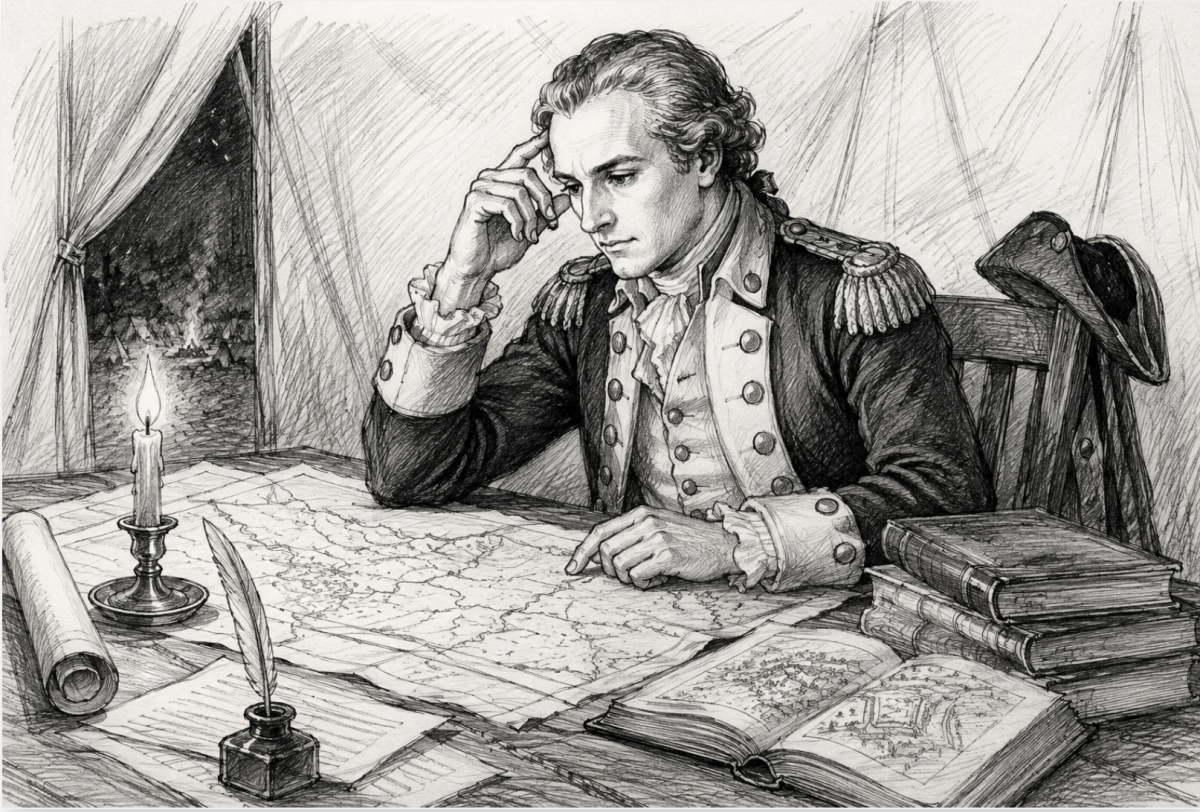
Where Greene lacked battlefield and leadership experience, he made up for it in candlelit self-education when no one was looking. Known for being an avid reader prior to his generalship, he devoured books on military history and tactics, becoming a true student of war. But Greene’s industry went beyond his studious behavior; it flowed directly into his dedication to his unit’s discipline and readiness to fight, as evidenced by his historic battlefield feats.
A modern leader can apply industry in three distinct ways:
- Read Unceasingly: Read doctrine, read the classics, and read the ancients. History is a wellspring of leadership lessons. While the warrior profession appreciates its own history, our leaders very seldom study it to its full extent. Reading is a gateway to thousands of years of hard-won insights. Leaders need only open this gate through an industrious virtue of self-study.
- Work Smarter and Harder: Admittedly, historical accounts do not detail Greene’s personal athletic prowess—he fought with a lifelong limp and was a businessman, not a typical profile for a tactical athlete. However, his Southern Campaign proved that his industry lay in operational endurance, meticulous logistical planning, and preparation. He understood that the physical and mental rigors of warfare—from executing high-risk tactical withdrawals to seizing operational initiatives—demanded a hardened formation. It is inexcusable to accept anything less from a modern leader. True industry means platform proficiency, demanding rigorous training standards, and ruthlessly eliminating friction before crisis hits. Systemic readiness is industry in action.
- Prioritize Action over Perfection: Do not let the fear of making a mistake paralyze you. Channel your industry into making small, decisive, daily improvements that yield tangible results. This takes the form of forging habits that stick, adhering to a calendar, and unabashedly carving out time for your own self-development…and then actually doing it!
The Virtuous Circuit
Watchfulness and Industry form a powerful, self-reinforcing circuit. Watchfulness tells you where to direct your energy, and Industry gives you the power to execute. Modern leadership often obsesses over grand concepts like vision-casting and transformational outcomes (albeit both good things), but when the ground is shaking beneath your feet, those concepts may feel more like theoretical tag-lines than applicable go-tos. Greene’s framework is sturdy, pragmatic, and grounded in action, relying entirely on your eyes, ears, and effort.
The Legacy of Inexperienced but Prepared
History remembers Nathanael Greene as the master strategist who successfully outmaneuvered the British Empire in the American South, a brilliant aide to Washington, and a leader of immense character and integrity. He was not born a military genius, and he did not have years to perfect his craft before being called upon. Through Watchfulness and Industry, he rose to the challenge when his soldiers, his family, and his nation needed him—a worthy goal for us all.
The next time you step into a role that makes your stomach drop, rely on your watchfulness and industry. You do not need to know all the answers on your first day. Cut out the self-imposed pressures, muzzle imposter syndrome’s loud voice, and consider what a young, untested, and inexperienced Nathanael Greene might have done: Watch closely. Work hard.
Tanner Cook is an active-duty Functional Area 59 (Army Strategist) officer currently pursuing a Master’s degree at Boise State University. Most recently, he served as the Commander of the Boise Army Recruiting Company.