By Joe Byerly
Today marks one year since I changed command and then signed out on terminal leave from the Army. This morning, I reread my journal entry from that day—and decided to write a few reflections on that decision: to stay in the 20-year game for one more play.
Last week, we published an article by an officer who chose to retire rather than compete for battalion command. He saw it as a binary choice: either stay in and command, or get out. But like most things in life, there’s nuance.
I did both.
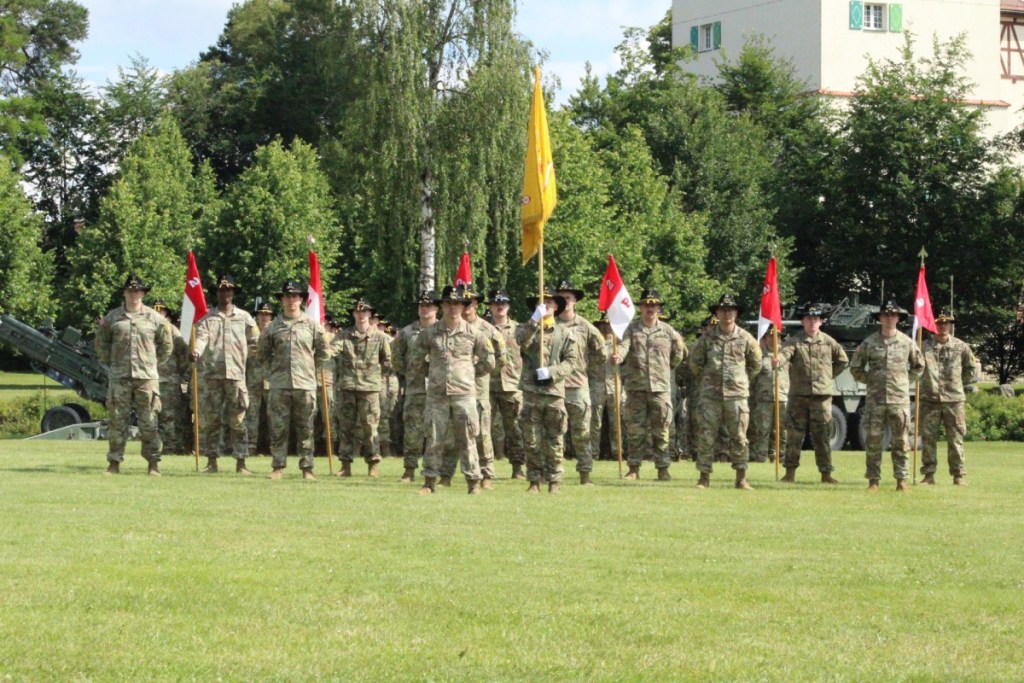
I made the decision to retire. I also made the decision to command. I chose to take battalion command in Germany. And, just a few weeks after handing over the guidon, I began terminal leave. There’s a lot to unpack in those three sentences.
That decision came with a lot—meaningful benefits, a few sacrifices, and a fair amount of anxiety. But now, one year to the day since I handed over the guidon, I’m still glad I did it the way I did.
Before I get into the benefits and sacrifices, a quick note about how I approached the decision. I didn’t broadcast it widely when I first took command. I had honest conversations with my Regimental Commander and senior rater. I also told my fellow commanders and our command sergeant major. Initially, I planned to keep it quiet from the formation until the final months. But around the 10-month mark, I found myself sitting in Transition Assistance Program (TAP) classes with some of the same Soldiers I was chaptering out. Not only was that very strange, but I knew I couldn’t keep the secret much longer. So, I sat down with my field grades and Troop commanders and shared my plan.
As we got closer to the change of command, the questions started coming: “Sir, what are you doing next?” So I came clean.
My decision to retire quickly turned into conversations about how grateful I was for a career in the Army—and I think, in a small way, that helped others think through their own reenlistment decisions.
Let’s begin with what was great about doing both. First, for me, command was my walk-off home run in the Army. I loved leaving on a high note. I wasn’t serving on a staff in a place I didn’t want to live doing a job I didn’t enjoy. I left service doing something I love –leading soldiers.
There’s a pressure that’s hard to describe until you no longer feel it. And that’s the one that comes from worrying about the next position, your next promotion.
No matter what anyone says, I believe every leader in a command position is aware—at least somewhere in the back of their mind—of their evaluation report. We need that strong evaluation to get us to the next level. We also want to be the best. We want to stand out. And that evaluation shapes more than most of us would like to admit: how we speak to our formations, what we push back on, which “extra” events we attend, even whether we speak up or stay silent.
When I knew my report was on the line, I found myself becoming hyper-competitive with people I considered friends—because we were being ranked against each other.
But once that pressure was gone, everything changed. I was still competitive, but the competition had perspective. My desire to be the best no longer trumped my desire to work shoulder to shoulder with my fellow commanders. Our squadron leadership team still used competition to push each other—whether it was an internal event like a PT challenge or Friday closeout competition, or something bigger like Best Squad or Gainey Cup—but it felt different. Healthier. Collaborative.
Without the weight of the evaluation report, I removed ego from command.
I don’t know if it was because I was older, had more experience, or simply more secure in who I was—but this time, I led the way I wanted to lead. I wasn’t driven by how it would look to someone else. And to be clear, I don’t mean I was reckless or out of step with the Army’s values. I’m talking about designing training events I believed in, creating a culture I cared about, and running professional development the way I thought would actually help my people. I wasn’t looking over my shoulder anymore.
NCOs and company-grade officers knew they weren’t talking to a zealot who only saw life through an Army lens, so they felt safe to come to me to talk about their reservations about staying in, etc.
That lack of pressure made command enjoyable. It reaffirmed to myself that my motives were pure. And I grew as a person and a leader.
Now, let’s talk about the parts that kind of sucked.
Retiring is hard—much harder than I gave it credit for. Retiring from command is really hard. And retiring out of command in Germany? That was brutal.
But a conversation with Jack Carr helped me find my footing. He told me how, even before he left the Navy, he knew he wanted to be a writer. That clarity gave him purpose, and he poured everything into what would become The Terminal List. His words gave me hope—that maybe I could do the same with my own passion.
But just because I was confident in my decision didn’t mean it was easy. The decision was simple. But living it out—that was hard.
Not everything with the transition was smooth. I didn’t do a career skills bridge program. I didn’t go to any networking events. I didn’t join great programs like COMMIT or the Honor Foundation. I just didn’t have the time. I wanted to give my squadron everything I had until the very last day—and I wanted to soak up every bit of Europe before we left.
Outside of the Transition Assistance Program (TAP), I didn’t take advantage of transition assistance. The USO Transitions Program in Europe was great—my transitions coordinator talked me through timelines and informed me of resources I didn’t know existed. I also participated in the American Corporate Partners program, and they paired me with a mentor who happened to be the Chief Brand Officer for NASCAR. He taught me a ton about leveraging content and social media to grow a platform. That experience paid off once I retired.
I also didn’t give my medical transition the attention it deserved. That’s probably my only regret. I went to the doctor when something hurt. I finally started documenting things. I even worked with the Wounded Warrior Project to file my claim. But I didn’t prioritize my VA benefits the way I should have. It’s one area of retirement I know I’ll be working on for years to come.
And truthfully, my anxiety level was high going into those final six months.That was probably the toughest part.
I didn’t know how “chasing the dream” would pan out. I started doing the post-retirement budget math—and the nerves kicked in. I wouldn’t know my VA disability percentage for another eight months, and that uncertainty weighed heavy.
That’s why I’m incredibly grateful Ryan Holiday encouraged me to join his team in a part-time role.
I was hesitant at first—I didn’t want to commit to anything before settling back in North Carolina—but I’m so glad I said yes. It gave me some financial stability once I retired and helped relieve a lot of stress during my final months in command. More than that, it gave me purpose in those first few uncertain months after retirement.
I’ve genuinely enjoyed my life over the past twelve months. And while my transition out of the Army wasn’t smooth, I’m not sure it ever is. There’s a certain level of friction that comes with leaving behind an identity you’ve worn for so long.
But I do know this: I have no regrets about choosing to command instead of riding out the last few years on active duty. I loved being a commander. Those final two years in uniform taught me more about leadership—and myself—than any previous assignment. And even now, I still get the occasional text or phone call from someone I had the honor of leading. Sometimes it’s for life advice, sometimes a request for a letter of recommendation, and sometimes it’s just a vent session. Each one is a small reminder that those two years mattered to others too.
Like any career advice, mine is autobiographical. My path won’t be right for everyone. But if sharing this reflection helps someone else make their decision with a little more clarity, then it’s worth writing.
So, it doesn’t have to be a binary choice. You can do both. If you’ve got one more play left before the clock runs out—make it count. Do what feels right for you.
Joe Byerly is a retired U.S. Army Lieutenant Colonel with 20 years of service, including tours in Iraq and Afghanistan, and command of a cavalry squadron in Europe. He earned numerous prestigious awards, including multiple Legion of Merits, Bronze Stars, the Purple Heart, and General Douglas MacArthur Leadership Award. In 2013, Joe founded From the Green Notebook.
A passionate advocate for self-knowledge through reading and reflection, he authored The Leader’s 90-Day Notebook and co-authored My Green Notebook: “Know Thyself” Before Changing Jobs, a resource for leaders seeking greater self-awareness. If this post resonated with you or sparked any questions, feel free to reach out to him at Joe@fromthegreennotebook.com.