“There is no substitute for victory.” -General Douglas MacArthur
“Winning isn’t everything, it’s the only thing.” -Vince Lombardi
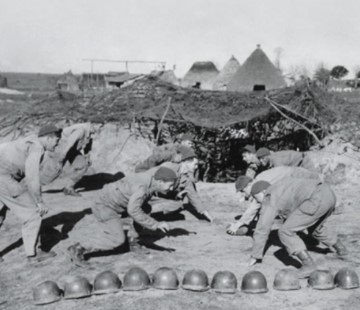
While baseball is America’s pastime, football is America’s game. Since the beginnings of American Football, the sport intertwined with the American Military and served as an analogy for battle, tactics, operations, strategy, and war. Indeed, Walter Camp, considered the father of American Football, served as the U.S. Navy’s athletic director during the First World War. In fact, a generation of our military’s World War II leaders played football in college and even coached teams during the interwar period, including Dwight Eisenhower, James Van Fleet, and Omar Bradley. Because of the strong connection between football and leadership philosophy, this article will analyze books by and about some of the best NFL coaches. This article will highlight the common leadership themes of each, including the loneliness of command, the importance of leadership philosophies, talent management, and leading with knowledge.
Bill Cowher and The Loneliness of Command
Heart and Steel is the autobiography of Bill Cowher, a former head coach of the Pittsburgh Steelers. Cowher, who led the Steelers to multiple Super Bowl appearances and one Super Bowl victory, not only describes his life story but offers his lessons learned in leadership throughout a lifetime of coaching football. More specifically, in Heart and Steel, Cowher teaches us that leaders must create space between themselves and the emotional or personal lives of those they lead. Even if this distance causes the leader to feel lonely, creating a decision space is necessary as leaders drive their team or unit to success.
Football head coaches learn quickly that they must distance themselves from those they lead, including the players and even other coaches. In Heart and Steel, Bill Cowher learned to use his assistant coaches to talk with his players about routine matters. By creating emotional distance between him and the players, Cowher could focus on larger organizational issues and lead his team to greater destinations. Cower also explains that creating this space allowed him to remove emotion from tough decisions. In Cower’s words, “it was going to be difficult—or impossible—to socialize with a player one night and then objectively hold him accountable the next day in a special teams meeting.” Although Cowher created a distance between himself and his players, he was still approachable and trustworthy, two important attributes of a successful leader. His players knew he was operating in their best interest and knew they could trust his decisions.
NCOs and Officers across the joint force realize that their peer group shrinks when they assume command positions. Early in one’s career, leaders find that leadership and friendship can be difficult to reconcile in a military organization. Indeed, promotion into the NCO ranks often includes moving to another part of the organization. At higher echelons, commanders discover quickly that the friendships they developed with peers on a staff disappear when they are the highest ranking member of a large organization. Leaders in the military must make objective decisions without any perceptions of favorability. Separating friendship from leadership allows leaders to have difficult, even uncomfortable, conversations with their subordinates.
Bill Walsh, Pete Carroll, and Leadership Philosophy
A key method of communication for leaders is to notate personal thoughts and philosophies and share them with peers and subordinates—for example, in a command philosophy. A command philosophy is a fundamental document for all commanders. Command philosophies often appear in the hallway of a command post and on the front page of a command’s portal page or website. Further, Officers serving in staff leadership positions (e.g. Branch Chiefs, Division Chiefs, Directors, and Chiefs of Staff) often exercise their own leadership philosophy. Leaders in the joint force should never shirk their responsibility to develop their own intentional, thoughtful philosophy, distribute that philosophy, and use it as a guide throughout decision making.
The Score Takes Care of Itself is Bill Walsh’s memoir and highlights the importance of creating personal leadership and coaching philosophies. Walsh was a former San Francisco 49ers head coach and a former Army Corporal who served two years at Fort Ord. Walsh’s leadership and coaching philosophies go beyond the gridiron and include the methods in which Walsh ran the entire 49ers organization, from the assistant coaches to the players, the scouts, and even the front office.
In his memoir, the Super Bowl-winning coach tells his readers, “a personal philosophy is the aggregate of your attitudes toward fundamental matters.” Walsh stresses how such a philosophy is the product of critical thinking, which allows us to develop rational reasons for holding a belief or position. Part of Walsh’s philosophy was to continually demand perfection from everyone in his organization, from the starting quarterback to the receptionist in the front office. Walsh was then ruthless in communicating his expected standards of performance in line with his philosophy. The result of meeting Walsh’s standards was an NFL dynasty with four Super Bowl victories in the 1980s.
Win Forever: Live, Work, and Play Like a Champion by Pete Carroll chronicles the concepts, thoughts, and ideas Carroll used to motivate the teams he coached, to include the NCAA Champion USC Trojans and the Super Bowl Champion Seattle Seahawks. Included in his philosophy were two principles: an emphasis on constant competition during practice and recognizing and rewarding effort, not just results. These two guiding principles ensured his entire team put forth their best effort at all times, not just the superstars on gameday. It helped his players develop a level of confidence in themselves and in each other. Carroll states that his coaching philosophy also provided guidelines and boundaries that kept him on track, critical for Carroll to define who his team was and what they wanted to achieve.
Writing forces the writer to make decisions and reconcile conflicting thoughts. When leaders in uniform take the time to write a command or leadership philosophy, they can overcome their conflicting thoughts and truly lead in an authentic way. More than a guiding light for the leader, leadership and command philosophies serve everyone in the organization by providing overarching direction. Done right, philosophies ensure everyone on the team, in the unit, and in the broad organization align their actions in a similar manner towards a common goal.
Vince Lombardi and Talent Management
The next two books underscore the life and philosophy of NFL coaching legend Vince Lombardi and emphasize his ability to manage talent within his team. When Pride Still Mattered: A Life of Vince Lombardi is a book by Pulitzer Prize-winning David Maraniss and Run to Daylight is a memoir by Vince Lombardi and W.C. Heinz. Lombardi’s connection with the military is central to his story. Lombardi began his college coaching career at the United States Military Academy at West Point, where he served as an assistant coach to the legendary Earl “Red” Blaik. Lombardi learned over the course of his career that each member of his team was an individual—that everyone learned in a different manner, had their own way of communication, and required different methods of motivation. In his memoir, Lombardi speaks to how veteran players could make up for a lack of skills with experience and wisdom and that, as a coach, he had to develop wisdom and experience in young players who made mistakes in practices and games.
Over the past decade, the joint force has discovered the value of managing talent effectively. Leaders in the joint force must continue to understand how the people around them learn, what they contribute, and where they fall short. Leaders must manage and account for the talents and shortfalls in their superiors, peers, and subordinates. Planners, for example, must understand how their commanders process information to help them make better and more informed decisions. Commanders themselves must distribute subordinate leaders across a formation to best serve the unit, positioning, for example, a team builder to oversee a team that lacks cohesion or a problem solver to oversee a team that lacks vision. Where such talents do not exist, leaders must teach and train their subordinates to exhibit such talents and fill a need in a way that increases both individual and collective performance.
Lombardi’s ability to treat players as individuals enabled each player to maximize their contribution to the team. This teaches leaders throughout the joint force that the combined strength of each individual serving within a unit is what makes the unit strong.
Bill Belichick and Knowledge
Bill Belichick has yet to write an autobiography, but two books that describe his leadership philosophy are The Education of a Coach by David Halberstam and Belichick: The Making of the Greatest Football Coach of All Time by Ian O’Conner. Belichick, whose father served as an assistant coach and scout for the Naval Academy, learned early in his career that what mattered most as a leader was knowledge. Indeed, Halberstam describes how Belichick neither played professional football nor graduated from a top-tier football school, such as Alabama or Michigan. What transformed Belichick into the greatest coach in the modern era with the most playoff wins was his profound knowledge of the game: from the tactics on the field to the rules governing free agency and the salary cap. This profound knowledge came from multiple places, including mentorship from coaches, such as his father and Hall of Famer Bill Parcells. Further, Belichick devoted his life to the study of the game. O’Conner describes him as “a grinder who never met an 18-hour workday he couldn’t turn into a 20-hour workday.” The mentorship, intense study, and eventually decades of experience in the sport turned Belichick into a human form of Big Data, at least in relation to football. In addition to his depth of football knowledge, Belichick understood that coaching was also a method of teaching, and that his job was developing his players so they were physically and mentally prepared to win at the highest levels of competition.
ADRP 6-22 discusses the importance of finding the balance between teaching, counseling, coaching, and mentoring. Leaders throughout the joint force quickly learn that when they join a new unit or military organization, their pedigree will only carry them so far. What matters for NCOs and Officers alike is the knowledge they bring to the table, their capacity to translate that knowledge into actionable plans, and their ability to transfer their knowledge to superiors, peers, and subordinates. Often, this transfer of knowledge raises the skill level of everyone in a unit or on an operational planning team. Indeed, organizations that invest in the development and education of their members make an investment in both the individual soldier and the long-term health of the joint force. Skilled and cohesive units led by subject-matter experts provide a significant advantage on the battlefield.
Conclusion
Just as in the article, Three Hockey Books on Leadership, the football books in this review can assist leaders in building and expanding their reading list beyond strictly military subjects. These football memoirs and biographies offer a multitude of lessons on leadership that apply to leaders throughout the joint force. Coaches, like military leaders, must find ways to motivate and bring out the best of individuals for the unit to function as a strong, cohesive team.
Dan Sukman is an Army Colonel with 24 years of service. He is an Army Strategist and currently serves as an assistant professor and military faculty at the Joint Advanced Warfighting School (JAWS). He is the author of the book American Football and the American Way of War: The Gridiron and the Battlefield, published in 2024 by Palgrave Macmillan.
The views expressed in this review are those of the author alone and do not reflect official positions of the Department of Defense or the U.S. Army.