
By Joe Byerly
Each morning, the Russian writer Leo Tolstoy got up and read his notebook of personally-curated passages from his favorite books (he later published this as A Calendar of Wisdom).
In his diary, he wrote, “I felt that I had been elevated to great spiritual and moral heights by communication with the best and wisest people whose books I read and whose thoughts I selected for my Circle of Reading… What can be more precious than to communicate every day with the wisest men of the world?”
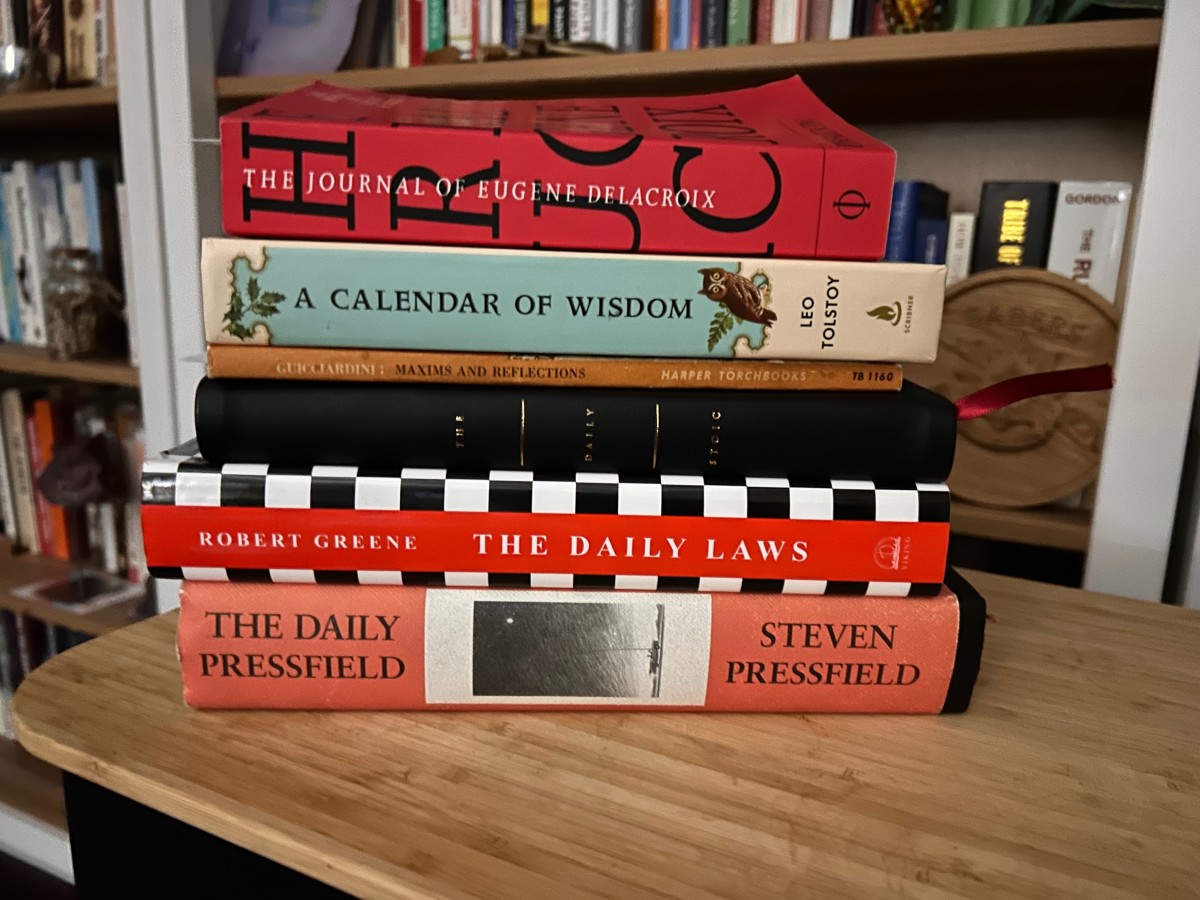
Lately, I’ve started a similar practice. Next to my chair is a stack of books that contain short daily passages that I can read in maybe 2-5 minutes and jump start reflection.
The books and authors I’ve chosen for my Daily Circle of Reading focus on subjects that interest me, or on areas of my life where I know I still have work to do.
For those of you who struggle to find time to read and feel like time isn’t on your side—because you’re too busy, too distracted, or too mentally taxed to take on another book—this practice may be worth considering: create your own daily circle of reading.
If you’re looking for inspiration to unlock your creativity….

The Daily Pressfield by Steven Pressfield is a collection of short passages drawn from his body of work—including Gates of Fire, The War of Art, and Turning Pro—along with updated commentary he added when compiling the book. It’s a steady source of inspiration on battling Resistance, committing to the work, and showing up like a professional—especially on the days when motivation is nowhere to be found.
If you want to better understand human nature…
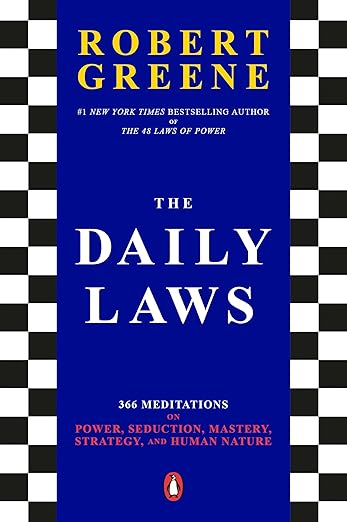
The Daily Laws by Robert Greene is another curated collection of passages drawn from across his work, including The 48 Laws of Power, Mastery, and The Laws of Human Nature. If you aren’t familiar with Greene’s books, they are meticulously researched, grounded in history, and built around recurring patterns of human behavior. Greene has a particular talent for distilling complex—and often uncomfortable—ideas about power, motivation, and influence into concepts that are clear, memorable, and immediately useful.
If you’re interested in learning from the observations and insights of someone who came before you…

The Journal of Eugène Delacroix is a lesser-known journal of a 19th-century painter who, alongside cataloging his days, reflects on the inner life in ways that still feel very modern. Delacroix writes about the different versions of himself he presents to different friends, noting, “I have two or three, perhaps more, for different friends, but I am forced to be a different man with each of them…to show to each the side of my nature which he understands. It is one of the saddest things in life that we can never be completely known or understood by any one man.”
He also wrestles with procrastination, distraction, self-doubt, and the daily challenge of returning to the work. Reading a few entries from his journal each morning reminds me that very rarely are the things we struggle with unique to us—they’re simply part of being human.
If you’re looking for a philosophy to prepare you for life’s challenges…
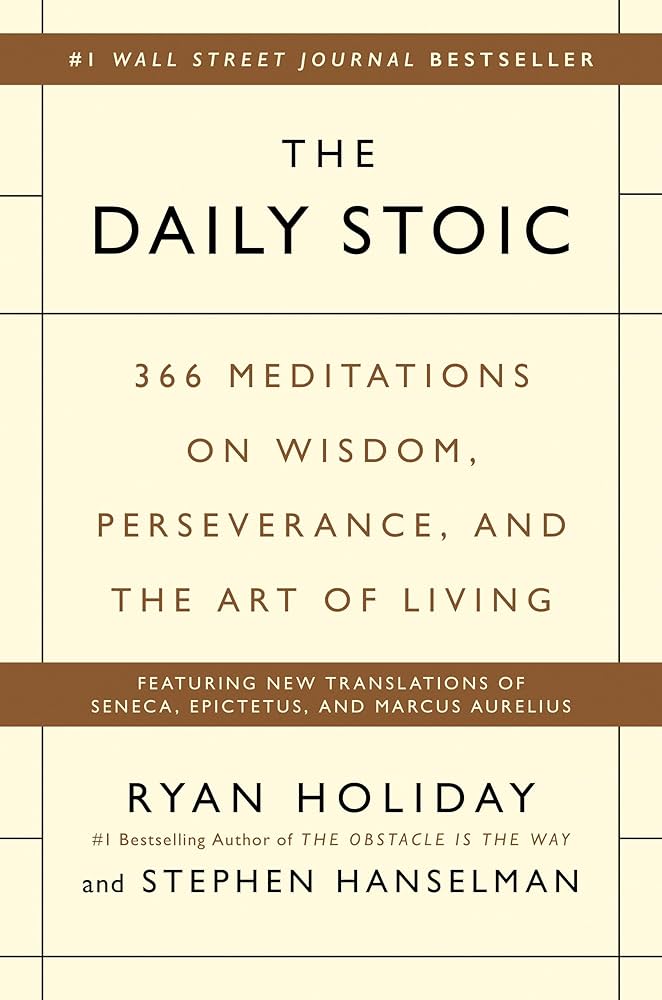
The Daily Stoic by Ryan Holiday and Stephen Hanselman is a collection of passages drawn from across the Stoic canon (including Seneca, Epictetus, and Marcus Aurelius). Holiday and Hanselman pair each selection with commentary that blends pop culture, history, and practical modern examples, helping translate ancient philosophy into something immediately applicable to everyday life.
If you want to gain insights from someone who lived during turbulent times….

Ricordi by Francesco Guicciardini, an Italian Renaissance statesman and contemporary of Niccolò Machiavelli, is a notebook of maxims he assembled to steady himself amid deeply turbulent times.
As the translator of this edition notes, “Guicciardini writes in a time of crisis and disillusionment, when ancient traditions and institutions had been uprooted or swept away, and when individual self-reliance and self-preservation, by means fair or foul, were at a premium.”
Ricordi contains insightful observations and reminders on power, fortune, diplomacy, and virtue. Guicciardini himself offers the best instruction for how to read them: “Read these Ricordi often, and ponder them well. For it is easier to know and understand them than to put them into practice. But this becomes easier if you grow so accustomed to them that they are always fresh in your memory.”
This is my Daily Circle of Reading. Even when I struggle to live up to what I’m learning, I make sure the ideas are at least fresh in my mind. I spend about fifteen minutes total moving through each of these books, and in that short window I prime my thoughts with reflections on creativity, virtue, and human nature.
It’s a far better way to begin the day than surrendering those same minutes to outrage, comparison, and an algorithmically-curated social media.
So whether you choose these books or something else entirely, I encourage you to be intentional about who you invite into your daily circle of reading.
Joe Byerly is a retired U.S. Army Lieutenant Colonel with 20 years of service, including tours in Iraq and Afghanistan, and command of a cavalry squadron in Europe. He earned numerous prestigious awards, including multiple Legion of Merits, Bronze Stars, the Purple Heart, and General Douglas MacArthur Leadership Award. In 2013, Joe founded From the Green Notebook.
A passionate advocate for self-knowledge through reading and reflection, he authored The Leader’s 90-Day Notebook and co-authored My Green Notebook: “Know Thyself” Before Changing Jobs, a resource for leaders seeking greater self-awareness. If this post resonated with you or sparked any questions, feel free to reach out to him at Joe@fromthegreennotebook.com.