
by T.G. Bradbeer
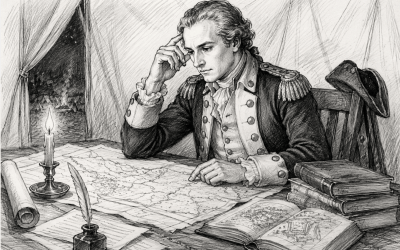
In his classic work, On War, Clausewitz describes the concept of Coup d’oeil as “an intellect that, even in the darkest hour, retains some glimmering of the inner light which leads to truth.” This ‘inward eye’ refers to the ability of an individual to make sense of what is taking place around them, and which enables them to make a good decision based on an evaluation of time and space, faster than their opponents. Clausewitz concluded that coup d’oeil was an innate ability that distinguished brilliant battlefield commanders.
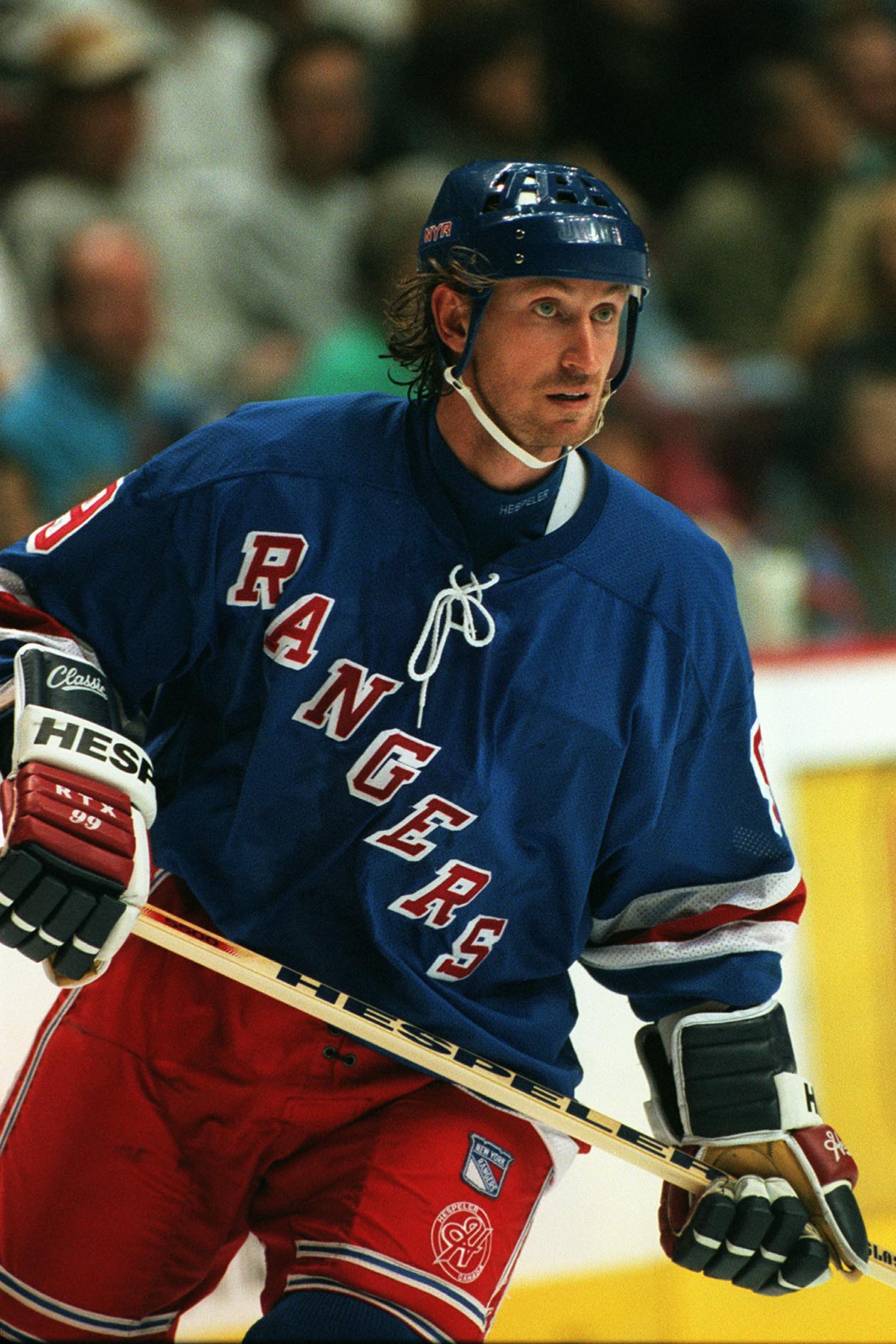
However, the ‘inward eye’ might also be a metaphor to describe a person who has spent a lifetime developing their skills and competencies to be the very best at their profession. Napoleon, Grant, and Patton are examples of commanders with that inner light. Each demonstrated coup d’oeil refined by years of study and reflection, of learning and practicing the profession of arms. In competitive endeavors, coup d’oeil often distinguishes the great from the mere practitioners – in war, Napoleon, Grant, and Patton – in sports, Jordan, Brady, and Messi. Yet none demonstrated the ability to see their environment, process information in space and time, and make decisions to dominate their domain like the ‘The Great One’, Wayne Gretzky.
Author Daniel Coyle argues in his book The Talent Code, Greatness Isn’t Born, it’s Grown, that ability can be developed by rewiring the brain to approach tasks differently, as well as through countless hours of practice under the watchful eye of effective coaches. Gretzky validates this concept. Gretzky’s opponents were amazed at his sense of anticipation, his lateral mobility, and his ability to see the whole ice, a skill very few players could ever achieve during their careers. Yet his intuition was not only innate; it took years of practice to develop. Analyzing this exceptional athlete yields two major takeaways for Army officers: First, the development of skills and competencies should be a goal of every officer throughout their time in service and throughout their lifetime. Second, the value of reflection, to learn from every experience, whether it be a failure or success, should be ingrained in all military leaders.
Gretzky began skating at the age of two and was playing against ten-year-old’s when he was six. At the age of ten he scored an incredible 378 goals in sixty-nine games, earning the nickname “The Great Gretzky.” In 1979, at age seventeen, he signed his first professional contract in the NHL. However, his small size (5’’11”, 155 pounds) and limited strength (bench pressing only 140 pounds) did not impress his peers or opponents. He compensated for his size and strength through intellect, determination, and courage. By age nineteen, was the youngest player to have a 50-goal season. His third year in the league he scored 50 goals in 39 games, with 92 goals and 120 assists by the end of the season. Both records still stand. As captain of the Edmonton Oilers he led his team to four Stanley Cup Championships in five years (1984, 1985, 1987, and 1988). Twenty-five years after his retirement he remains the NHL’s all-time leader in goals, assists and points in both the regular season and playoffs.
What made Gretzky the greatest hockey player on the planet and earned him his iconic nickname ‘The Great One’? First and foremost was his intelligence and ability to sense where all the players would be on the ice when he had the puck. “I get a feeling about where a teammate is going to be. A lot of times, I can turn and pass without even looking.” His vision, imagination, and creativity were all exceptional. “He routinely created plays no one had ever seen. He played hockey like a chess master, several steps ahead of everyone else.” His ability to demonstrate his coup d’oeil started when he was first learning to play the game from his father who told him “skate to where the puck is going to be, not to where it has been.”
This intuition or coup d’oeil helps explain Gretzky’s exceptional abilities on the ice. Coaches and players thought he possessed extrasensory perception, but Gretzky would argue that this ability to know where the players would be in the next few seconds and more importantly, where the puck was going to be, was not just about instinct and intuition but was also the result of thousands of hours of study and practice of the game. “Nobody would ever say a doctor had learned his profession by instinct; yet in my own way I’ve put in almost as much time studying hockey as a medical student puts in studying medicine.” This is a critical lesson for professional military officers to remember that will greatly assist them in developing their expertise in the profession of arms.
Canadian journalist Peter Gzowski wrote that he believed ‘The Great One’ seemed to be able to slow down time. “Winding up for the slapshot, he will stop for an almost imperceptible moment at the top of his arc, like a golfer with a rhythmic swing [and] use this room to insert an extra beat into his actions. In front of the net, eyeball to eyeball with the goaltender . . . he will hold the puck one extra instant, upsetting the anticipated rhythm of the game . . . extending the moment and then shooting the puck into the net before the goalie realizes what has happened.”
Hall of Fame NHL goaltender and author Ken Dryden observed, “Gretzky was a major influence on the way the game was played in the NHL. He advocated for developing strategies that took advantage of the skills of each player on the team,” not just focusing on the player with the puck setting up the super-star goal scorer. “Gretzky reversed that. He knew he wasn’t big enough, strong enough, or even fast enough to do what he wanted to do if others focused on him. Like a magician, he had to direct attention elsewhere, to his four teammates on the ice with him, to create the momentary distraction in order to move unnoticed into the open ice where size and strength didn’t matter . . . Gretzky made his opponents compete with five players, not one, and he made his teammates full partners to the game.”
In a tribute to the greatest hockey player of all time, NHL Hall of Famer Mario Lemieux, who played with Gretzky for Team Canada during the 1987 Canada Cup, stated that Gretzky taught him what it takes to be the best. “Practicing with him for six weeks showed me how hard you have to work to be Number One in the world.”
To summarize, the development of skills and competencies, reflection of lessons learned from every training and education opportunity, as well as developing the habit of lifelong learning, will greatly assist Army leaders in becoming experts within the profession of arms. It might even provide them with their own version of coup d’oeil.
Thomas Bradbeer is an Associate Professor in the Department of Command and Leadership at the US Army Command and General Staff College, Fort Leavenworth, Kansas. He served for twenty-five years as a Field Artillery officer. He played ice hockey on or near every Army post he ever served at (Ft. Sill, Korea, Ft. Cavazos, Ft. Knox, Ft. Victory, Germany, Canada, and Fort Leavenworth), except Iraq for obvious reasons.