By Michael Everett
Leaders in the 2023 military need to interact on social media. Period.
Whether you like it or not, modern leadership has spilled over into the digital domain. If you fight the social media current, you will almost certainly meet the undertow, pulling you out to sea, never to return to leadership relevance. So, shed your cranky inner self, and prepare to dive headfirst into the world of digital interaction. If you commit to this path, acknowledge its importance, and leverage its power, you will add another dimension to your effectiveness as an Army leader. In this short guide, I will lay out the why, when, where, and how to leverage this powerful tool.
First, a disclaimer. I am not a psychologist or a social media expert, nor am I professionally trained in public affairs. However, I have managed social media accounts at the battalion, company, and platoon level with great success, and have established enough comfort in discussing the topic that I feel qualified to share some lessons learned with fellow military leaders.
The Modern Leader
72% of Americans and 84% of people between the ages of 18 and 29 are active social media users. Based on this information, let’s assume that at least 72% of soldiers are using social media, then consider the implications for the modern military leader. Social media truly expands a leader’s presence and arena of influence well beyond the physical workspace. This is just as vital as physical presence has been, and continues to be. But what we once considered simply as “leader presence” now includes “network presence.” Your people are scrolling social media platforms, participating in the vast number of networks available. Do not waste an opportunity to be one of the things that they see or interact with on their personal accounts. By doing so, you can increase your influence in areas previously inaccessible.
Your Audience
If you are committed to leveraging social media to reach your Soldiers and their families, we can dive into the details of framing command philosophy and your leadership identity online. As you consider establishing your social media presence, the first question you have to answer is, “Who is my audience?” This answer will be different depending on the type of organization you are leading. If you are commanding a training battalion, you are likely looking to communicate primarily with family members less familiar with military life, which may require more posts regarding general military services and benefits (e.g. Red Cross, Tricare). If you are a platoon leader, you are looking to provide content that your Soldiers can share with their families to articulate what they do for a living (e.g. training exercises or machine gun ranges). If you are in charge of a unit or office that is partially composed of civilians, then you will approach this differently than a battalion of senior commissioned and noncommissioned officers.
Your audience will influence not only your social media content, but which platforms you use. While older audiences might only use Facebook, younger audiences might not use Facebook at all in favor of newer social media platforms. There is no exact formula for how or where to communicate with your people. If you’re not sure, ask them, put out a survey, or do some research on the age group you lead. The point is, all units will need to engage their audiences with a tailored message on the appropriate social media platforms.
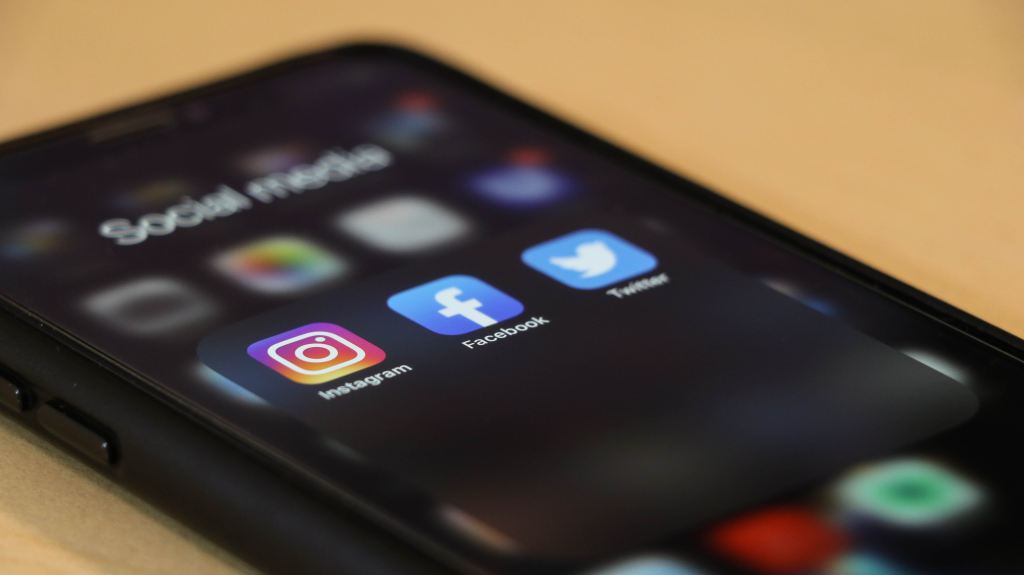
Note: The most used social media platforms for the military’s primary age demographic (18-29 years of age) are YouTube (95%), Instagram (71%), and Facebook (70%). While the 30-39 years of age demographic is YouTube (91%), Facebook (77%), and Instagram (48%).
Communication is Key
Read that again. Communication is key. Absolutely, positively key to your success as a leader in any capacity. As military leaders, we understand that our profession is not always predictable. Just as a firefighter knows that he can’t predict his calls for the next year, as military professionals we know that our job is to stay ready and be prepared to deploy at a moment’s notice. With that said, we need to provide our people and their families with all the predictability we can. We do that by communicating.
For an Army Leader, social media is a critical part of that communication. We cannot afford to miss out on a tool that provides constant and accessible communication with our people and the loved ones that support them. If we are going to provide predictability in 2024, we need more than family readiness groups and events. We need to be where the people are.
Branding
Once you find the appropriate platforms, you will need to brand your unit or office. That little thumbnail picture can make or break your page or handle. Pictures and logos can have a significant impact on identity and emotional reaction. The main picture that defines your social media identity is a powerful tool in branding your team. Branding provides a shared identity that can be very powerful.
Additionally, your verbiage when posting is a crucial part of your brand. Do you plan to brand your audience as a “family,” or do you address them as “team?” Will you use a different term or delivery when you are posting as the commander or leader than you would if you are posting as the page manager? These are important things to think through because your posts, tweets, videos, and polls will be out there for the world to see.
Think about the way you verbally, physically, and emotionally communicate as a leader and carry it over to your social media persona and unit brand. This is your platform to reinforce your in-person words and themes, while building your unit’s identity. Use it wisely.
What to Post
Deciding what you want to post is simple. At a minimum, your page or handle should post your people’s accomplishments. For example, capture the awards that they receive at a ceremony, graduations, personal accomplishments outside of work, and anything that you would like to express gratitude for their efforts.
Posting training events is also a no-brainer. Be sure to capture pictures of these events and ensure to explain the event in a way that will make sense to PFC Smith’s (civilian) Aunt Sally. Families want to know and see what their Soldiers are doing in the field while they are away. Be sure to highlight your leadership priorities and those of the leaders above you. So long as it is not a security concern (more on that below), share it.
You can also celebrate the lives of those that have been killed in action while serving in your unit. And you can tie significant events and dates from your unit’s history into a post, linking past lineage with present excellence.
Finally, you can post specific messages from you and the leadership team. This is an excellent way to reach your people, personally, while they are not on the clock. Consistent communication and connection is crucial in showing your people that you care about them on and off duty. Which brings us to the next point…
Engage Directly On Social Media—And Build Your Social Media Team
Leaders need to interact directly on social media when possible. While writing posts that explicitly identify you, by name or callsign, can be powerful, there are few things that can replace live or recorded video. There is no doubt who is delivering the message if you are front and center, on camera, doing it yourself. The younger demographic has become increasingly engaged in online video media, more so than audio or written communication. If you want to reach your people, a powerful tool is the record button. While video requires you to be vulnerable, this method will show off your “human side” and exponentially improve your chances of reaching your target audience.
But as a modern leader, you have thousands of competing priorities, and most likely you will need to appoint a social media manager. Just make sure you tell your Social Media Manager what content you intend him or her to capture and post. That is key.
Social Media Managers (SMM) need to be trained! This is a step that is required (for good reason), but often overlooked. Your SMM is the linchpin to your social media success. Conduct an interview process for the position, it’s that important! Choose someone that is mature, level headed, responsible, and active on social media. The first three are common sense, but that last one is crucial. Do not select a SMM based on convenience. Ensure it is someone that understands how to navigate multiple platforms and how to appropriately communicate on each to different audiences.
Your people can tell if you are present on social media or if you have a social media manager that posts in your absence, and it can become painfully obvious if you are completely detached. Unless the page is specifically named after you or your position, no one expects that you are posting everything that is published to the unit or office account. It is okay (and even encouraged) to have a social media manager, but only if you are providing adequate guidance and direction on a regular basis.
The impact of one post, tweet, or video can be fast and expansive. Knowing that you may reach thousands of people in the matter of minutes, select your SMM with this in mind. A minor slip-up in this domain can lead to an erosion of trust and confidence in you and your ability to lead your organization.
Have a Social Media SOP
The military is a machine, complete with constant turnover. If you want anything to stick, you have to standardize it in a Standing Operating Procedure, or SOP. In this sense, “standardize” means creating a living document meant to capture and codify what is required for your SMM to seamlessly execute at any given time.
The SOP should not be a massive legal document filled with regulations and jargon. It can be a simple PowerPoint with screenshots, examples, a general guideline for communication, and, most importantly, your leader’s guidance. It should be a document that your SMM can pick up and know how to run your social media accounts within minutes.
OPSEC and Other Risks
Of course, through all the influence and engagement that your social media presence produces, you will need to ensure it meets operational security (OPSEC) requirements. No amount of social media interaction or amplification is worth sacrificing OPSEC. While part of training your SMM is ensuring he or she has completed their online OPSEC training, this does not relieve you of your responsibility as the leader to oversee this critical aspect to your organization’s online presence.
Additionally, the mere presence of a social media footprint in an official capacity may signal to your young service members that you condone social media use and mindless scrolling. Even worse, you may begin to use social media as a primary communications tool, cutting out in-person communication over time. Do not fall victim to using these tools as a communications crutch. They are there to augment, not replace your communication strategy.
Get to it!
This is only a starter guide to social media for Army leaders. It is far from comprehensive, but will hopefully serve to motivate more reluctant leaders at all levels to get more engaged with their people through social media. Whether you are the young leader that grew up with social media or the older generation, you are now the modern leader and it is no longer a matter of should or shouldn’t. It is now a matter of how. Now get out there and get to it!
CPT Mike Everett is currently serving as the commander for D Company (MICO), 6th Brigade Engineer Battalion (Airborne) at Joint Base Elmendorf-Richardson, Alaska. He has served as a company commander for over a combined 25 months. He has also served as a Squadron Unit Public Affairs Representative (UPAR) and has managed multiple social media footprints from platoon to battalion level.