I’m currently wrapping up an amazing year at the Naval War College in Newport, RI. Looking back, I can honestly say that this has been one of the highlights of my military career. When my wife and I arrived here, we promised each other that we would take advantage of this location because we weren’t certain the Army would ever send us to live in another tourist destination. We made good on our promise! Over the course of the year we traveled several times to New York City, explored New England, enjoyed Red Sox Games atop the Big Green Monster, tailgated polo matches, did not eat in a single chain restaurant, and took advantage of the ample family time. I can’t even begin to count the number of lobster rolls I’ve devoured up here over the past twelve months.
The Naval War College is academically demanding; the reading and writing requirements alone are enough to keep a person in the library for a year. Fortunately, I was able to balance the academic requirements and time with my family due to the choices I made prior to attending ILE. I can’t imagine what this year would have been like for me if I wasn’t already familiar with the material, experienced in writing, or able to phone a friend. Not only do I feel like I got the most out of this institution, but I also got the most out of my time here (see first paragraph). Below is a list of recommendations to younger officers finishing command who are thinking of attending the Naval War College.
Get to know Uncle Carl and his dead friends
In 2012, I had the opportunity to help develop the Maneuver Leader Self-Study Program. In the process, I became very interested in reading the books and articles that are on the suggested reading list. For an entire year, I jumped around the various topics of the program, slowly building a base of knowledge that was previously foreign to me. I did this at a leisurely pace, not feeling rushed or stressed out. I had months to read, digest, and reflect upon On War, vice the week given here at the War College. By the time I arrived here, I had a good foundation in Clausewitz, which I was able to build upon.
I’m not one of those leaders who advocate trying to digest all of the masters of war (Clausewitz, Sun Tzu, Mao, Mahan, Corbett, etc.) as soon as officers become a second lieutenant; I had a hard enough time remembering to not lose track of my weapon. I do think that as soon as captains finish their stint in company command, they should immediately begin dedicating more time to developing an understanding of war and warfare, and tackling works like On War. The time following command is the perfect opportunity to reflect and introduce yourself to new ideas. If you read the books and articles in the self study program, nothing here at the War College will be new to you…except Mahan…you’re going to love him!
Ditch Power Point and open a Word document
By the time I finished up as a company commander, I was very proficient at Power Point. I could put together a spectacular briefing liking myself to a Power Point Da Vinci, however I couldn’t write. The year before ILE, it took me four months to write a 1600 word article, and that was with two people helping me edit! Even though writing was painful at first, I kept at it, writing multiple blog posts, articles, as well as helping others edit their articles. All that practice helped me relearn a lot about writing, which in turn, better prepared me for the steep writing requirements of the curriculum.
Blogging and writing articles paid huge dividends for me at the war college. You don’t have to go out and start a blog like I did, but try to write at least one or two articles, after command, to get back in the practice of writing. For many of my peers, the Naval War College is the first time they have had to write a paper since their undergrad time or their career course. Several of them struggled through the writing process, spending large amounts of time on the mechanics. Writing came very easy to me only because I had a lot of practice before arriving.
Try to be the dumbest person in your network
Two years ago, I began branching out and connecting with people who were a lot smarter than me. I wasn’t trying to “network” per se, I just wanted to follow their feeds so that I could absorb what they suggested or shared. Many of these people were authors, technology experts, foreign policy commentators, and historians. Their expertise aided me when it came time for help researching or developing an idea. On several occasions, they recommended books, articles, or even sent me chapters of their own books to help in my research. Without them, I would have spent endless hours in a library starting from scratch.
I recommend leaders use social media tools, such as Twitter, to build and enhance personal learning networks, connecting with experts who they can call upon when it comes time to develop and research ideas.
The Naval War College in the rearview
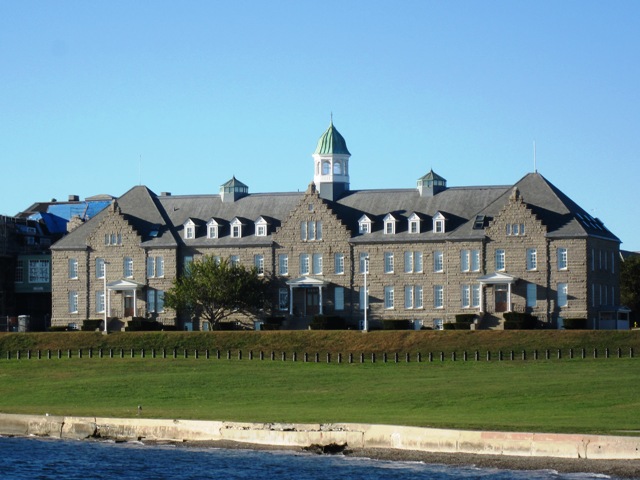
The year the Army gives us to educate our minds is also the perfect year to reenergize our families. Don’t let the academic rigors of the War College take away from this opportunity. Come prepared. If you haven’t started reading and writing now, take advantage of the window following company command, so that you aren’t meeting Uncle Carl for the first time or writing your very first paper in ILE. If you read and write at your own pace, on your own time…I promise you that you will be able to have your Newport lobster and eat it too.