By: Joe Byerly
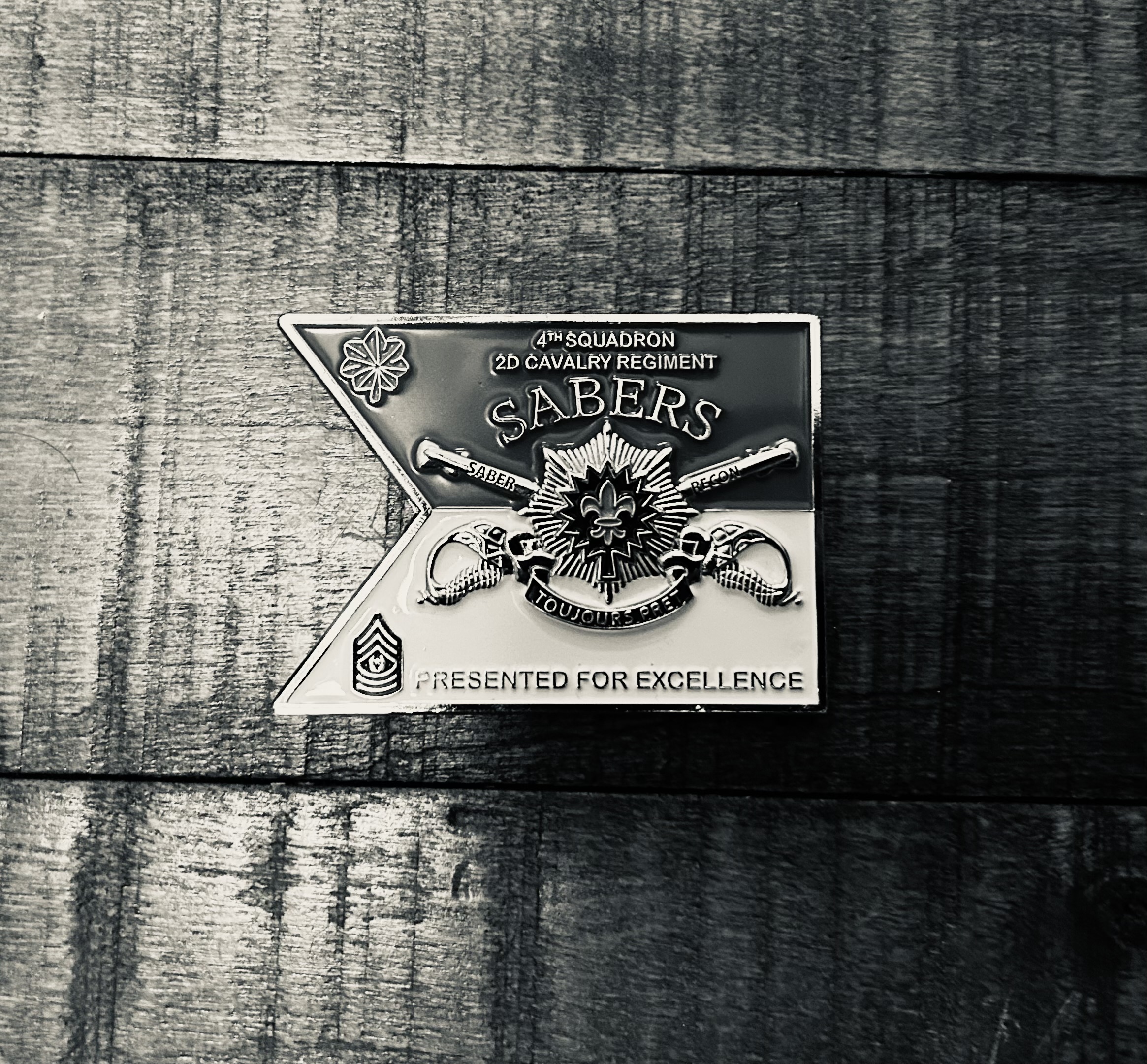
These days, I’m often asked two questions: First, was it worth staying in uniform for 20 years? And second, am I glad I chose battalion command, even when I could have taken an easier job to focus on retirement?
In sharing my answers, I hope to help others in thinking through their own big decisions.
Choosing Command
Deciding whether to compete for and accept battalion command is deeply personal. It involves weighing professional goals against family considerations—a spouse’s career, kids’ education, and quality of life. For me, the decision wasn’t easy. I went back and forth, even considering turning it down after I was selected. Life was stable: a great community, amazing friends, kids in good schools, my wife in a fulfilling job, and a home we loved.
But there’s another part of this decision that isn’t often openly discussed—the emotional risks. Taking command can feel like putting two decades’ worth of poker chips on the table. Not getting selected—or worse, being removed—can feel like watching the dealer sweep away years of hard-earned chips. It’s a uniquely defeating experience.
I knew the risks going in, both personal and professional. It seems like every other week, the Army Times reports a commander’s removal due to an investigation. Even the Inspector General statistics on commanders under investigation made me wonder what the hell was happening across the force.
On top of this, I had spent nearly a decade building From the Green Notebook in my free time. I worried that disgruntled soldiers might file complaints, leave negative reviews on my podcast, or criticize me on social media. These were real concerns, layered on top of the challenges every commander faces.Yet with everything I was wrestling with in 2021-2022, I still decided to take command.
A serendipitous conversation with a Sergeant Major played a pivotal role in my decision. One day, seemingly out of the blue, a Sergeant Major I occasionally spoke with at work approached me. He told me he’d been thinking about me and felt compelled to share his perspective: that I should take command. His advice offered a perspective I hadn’t fully considered. He explained that the responsibility of command would challenge me in ways I hadn’t yet experienced, teaching me about myself and providing a sense of fulfillment that an easier path simply couldn’t offer.
What made the moment so impactful was its timing. By then, I had already made up my mind to turn down the opportunity to command, but his words made me reconsider my decision and gave me a new lens through which to view the challenges ahead.
The more I thought about what he said, the more I realized I had an opportunity to impact the lives of over 500 people for two years. I could lead in a way that genuinely improved the organization—without the pressure of worrying about my next evaluation report.
I also knew that if I avoided command out of fear, I’d forever wonder, “What if?” I’d always question how I might have done in that role.
Ultimately, I needed to know if everything I’d read and written over the years would make a difference when I was in the leadership seat. Would it help me be a better leader?
Commanding
I entered command with the mindset that this was my final job in the Army. I wanted to lead the organization the way I’d always envisioned—to be the commander I had always wanted but didn’t always get.
Before taking command, I came to a realization: Whatever program, process, or tradition I started would likely disappear when I left. So, I made a conscious decision to focus on developing the people in the organization and not worry about what happened after I was gone.
Looking back, I have no regrets. Command gave me the chance to help people pursue their goals—whether it was supporting someone aiming for a special mission unit, writing a letter of recommendation for grad school, or connecting someone with opportunities in their chosen field. I got the opportunity to help people get jobs and deployments they wouldn’t have gotten through the Army’s personnel system. I became an advocate for each and every leader who came to me with a request that matched their talents. I approached everything I did through the lens of leader development. I wanted to create a cadre of competent leaders who continued to invest in others as they climbed the ranks. I hoped by investing my time and energy in others, I would be able to have positive ripple effects, as they grew to realize their full potential.
The experience taught me invaluable lessons. I learned about communication, leading through crises, and navigating organizational friction. I learned from my soldiers, witnessing the incredible sacrifices young men and women are willing to make to complete a mission. Perhaps most importantly, I learned about myself—my values, my weaknesses.
I learned that reading, writing, and reflecting –the same values we espouse at From the Green Notebook, had in fact prepared me for this role. Those 24 months weren’t without frustrations. Because I cared deeply, when people failed or when plans didn’t go as envisioned, I carried that weight.
I made my own share of mistakes, too. I remember racking my brain trying to turn around a maintenance program that was failing because I ultimately realized that I had failed to put enough command emphasis on it. I felt sick to my stomach when Soldiers had lapses in judgment, making life-altering mistakes, and stood at my desk for punishments. There were times I felt exhausted, struggling to be fully present with both my Squadron and my family, when burnout set in.
Even so, the experience was worth it. The serendipitous Sergeant Major was right—battalion command was deeply fulfilling. I discovered that my years of self-development had paid off, enabling me to pour into the lives of the men and women I had the privilege to lead. By the end, my rucksack was empty –and that is the way it should be.
There’s a powerful life lesson in that. Sometimes, the very things that scare and challenge us the most turn out to be exactly what we need to grow and find fulfillment.
Command gave me the opportunity to live up to my potential while striving to improve the lives of the men and women I served with.
Finally, we grew closer as a family, relying on each other more than ever before. Along the way, we met incredible people and forged friendships that not only supported us during that time but have remained strong, even as our paths have since diverged.
So, returning to my purpose in writing this, I understand the sacrifices, uncertainty, and weight of the decision many of you face. My only advice is to lean into the challenge, not out of obligation, but because it might just be what you need to grow. Whatever you choose, make the decision alongside your families, and do so with courage and a clear sense of purpose.
Joe Byerly is the founder and director of From the Green Notebook. He officially retired from the U.S. Army on August 31, 2024. If this post resonated with you or sparked any questions, feel free to reach out to him at Joe@fromthegreennotebook.com.