by MAJ Daniel J. Sprouse
Creating a culture where first-line leaders recognize Soldiers for their pursuit of excellence is essential to unit success. While many military leaders focus on awards (such as achievement and commendation medals) as the primary means of acknowledging Soldiers, awards alone do not fully capture the culture we want to create. In my experience, traditional award programs – while important – often overlook the daily efforts that build strong teams and drive sustained excellence. We need something more dynamic, immediate, and ingrained in our culture.
“CULTURE is the foundation: when LEADERSHIP builds a strong CULTURE,
it breeds the BEHAVIORS that produce lasting RESULTS.”
As Kim Scott states in Radical Candor, recognition is harder than criticism because it requires genuine care and thoughtful feedback. Leaders must balance direct challenges with personal investment in their Soldiers’ development. Dan Coyle’s The Culture Code reinforces this idea, highlighting that high-performing organizations thrive on continuous, real-time feedback, not just periodic evaluations.
It is also essential to differentiate between recognition, rewards, and awards.
- Recognition is the act of identifying and expressing gratitude for achievement, service, or ability.
- A reward is an informal token of positive reinforcement.
- An award is a formal recognition of outstanding performance.
Unlike rewards and awards, which often come with tangible benefits, recognition is about acknowledging effort and impact, reinforces positive behaviors, and fosters a culture where Soldiers feel valued. A structured recognition system must assess significance, level of responsibility, and resulting outcomes to ensure fairness and transparency.
Principles of a Strong Recognition Program
A good recognition program must be transparent, ensuring Soldiers understand the criteria and process. Participation is essential – leaders must be actively engaged, not just compelled. Continuous feedback is also critical; recognition should be ongoing, not limited to the end of a duty cycle. Too often, leaders rely on annual awards or end-of-tour ceremonies when real impact comes from recognizing Soldiers in the moment, when their efforts are most visible and relevant. Recognition should be timely, relevant to the action taken, and genuine. The delivery should be professional and authentic, reinforcing trust and appreciation within the unit.
Recognition applies not only to Soldiers but also to their families and Department of the Army Civilians. Meaningful acts of appreciation – whether verbal praise, formal ceremonies, or simple gestures – strengthen unit cohesion and morale. Recognition is a key tool for developing resilient, innovative Soldiers who remain committed to their unit and mission. Younger generations in the military are more innovation-driven and focused on professional development. They seek purpose, mentorship, and meaningful feedback, making recognition an essential part of leadership today.
Practical Recognition Strategies
To ensure recognition becomes an integral part of unit culture, leaders should establish a structured menu of recognition options – a framework that makes recognition timely, transparent, and genuine while fitting within the unit’s operational tempo and resources. Unlike formal award programs, this menu does not necessarily need to be posted in unit areas. Doing so could turn it into a check-the-box task rather than a true leadership tool. Instead, leaders should apply it as opportunities arise. Below is an example of a recognition menu at 2-2 Stryker Brigade Combat Team (7th Infantry Division), built on simple, cost-effective actions (whether through existing unit funds, leader investment, or team-based solutions) that reinforce excellence, professional growth, and unit cohesion.
| LOE | What | When | Cost |
| Integration | Formal Introduction | Day 1 in SQD | $0 / 10min |
| Welcome phone call to significant other / parents | Day 1 in BDE | $0 / 5min | |
| 1st Unit PT Shirt | 1st Milestone event | $20 / 5min | |
| Family | Covering duty to give back Family time | Anniversary / Birthday | $0 / 24h |
| Unit Gift (Diapers, Cards, Housewarming Gift ) | Birth of a Child / Home Purchase | $40 / 1h | |
| Flowers, Cards, Share a meal /coffee | Family illness / Death | $40 / 1h | |
| Professional | Go to event, publish on Social Media, highlight in front of formation | NCOES Graduation / Honor Graduate | $0 / 1h |
| Name posted on the wall | Earned / Build Experts | $0 / 30min | |
| “Celebrity” Meal or Drink | Higher Education | $25 / 2h | |
| Achievement | Hand-written Congratulations card | Completing a Training Event for the First Time (ACFT, Gunnery, etc.) | $1 / 10min |
| Display Trophy, Shout-out and Picture on Unit FB / IG Page and phone call to Family | Best Competitive Performance at SQD / PLT / CO Training Event | $20 / 1h | |
| Indoctrination Ceremony / Name put in for school / Letter to Family | 1 Yr. in SQD / Major Training Exercise – Good Standing | $3 / 1h | |
| Exemption from Cleaning/Close Out requirement for the last day of the week | Professionalism (Right Time, Uniform, Grooming Standards) / Stewardship | $0 / NA | |
| Improvement | Gets to plan PT Competition or workout | Physical fitness driven | $0 / 2h |
| Teach a class, act as an assistant instructor, stakeholder position | Performance driven | $0 / 2h | |
| Farewell | Farewell PT Event or Team Meal | Re-Assignment Out of Team / Crew | $10 / 1 h |
| Formal Farewell and Card | Re-Assignment out of Squad / Platoon | $5 / 30min | |
| Plaque and Team Photo | PCS / ETS | $30 / 5min |
Recognition starts the moment a Soldier arrives in the unit. A first impression can set the tone for their entire experience, which is why taking time to personally welcome new Soldiers is crucial. As a Company Commander, my First Sergeant and I made it a point to sit down with every new Soldier upon their arrival, along with their first-line supervisor, to talk about their background, share insights about the unit, and discuss the training calendar, command philosophy, and priorities.
This wasn’t a check-the-box in-processing brief; it was a personal conversation that helped Soldiers understand what was expected of them and, more importantly, what they could expect from their leadership. We also gave them a welcome letter addressed to their family, inviting them to connect with the unit through social media and the Soldier and Family Readiness Group’s email distribution list. More often than not, we encouraged the Soldier to take a picture of the letter and send it to their parents or spouse right then and there. This small but meaningful gesture reinforced that the Army isn’t just about the individual Soldier; it’s about their support system, too.
Building Your Own Recognition Program
Leaders can adapt and expand on this structure based on their unit’s culture, available resources, and the behaviors they want to reinforce. The key to an effective recognition program is consistency; leaders should not wait until year-end award ceremonies to highlight excellence.
When creating a recognition menu, consider the following:
- Make it Visible – Post the menu if desired, brief it at leader meetings, and ensure everyone understands how recognition works.
- Encourage Peer Recognition – While leader-driven recognition is important, giving Soldiers the ability to recognize each other strengthens buy-in.
- Include No-Cost and Low-Cost Options – Most meaningful recognition requires little to no budget; time and effort are what matter most.
- Align with Unit Identity – Whether it’s Breaking the Rock, a unit coin ceremony, or a quarterly/monthly “Best Squad Competition” event, traditions reinforce culture.
- Measure Effectiveness – Recognition should have an impact. If Soldiers aren’t motivated by it, adjust based on feedback.
By structuring recognition into everyday leadership practices, company commanders can create a positive, high-performing culture where Soldiers consistently strive for excellence – not because they seek rewards, but because they take pride in their service and their team.
Recognizing Groups: The Power of Shared Success
One of the most effective ways to recognize teams is through shared traditions that build pride and identity. When I commanded Centurion Company, 2-1 Infantry, we carried forward a “Breaking the Rock” tradition to honor the top-performing team, squad, or platoon after major training events such as live fires or field training exercises. Inspired by a practice in college football, this ritual became a powerful symbol of collective effort and success.
After every major training event, the entire company would gather in the company area. An inexpensive 12×12” pavestone, spray-painted black with a stenciled name of the exercise, would sit in the center, next to a sledgehammer. First Sergeant and I would step up and announce the top three performing teams, building anticipation. Then, we would hand the sledgehammer to the first-place squad or team leader who had earned it.
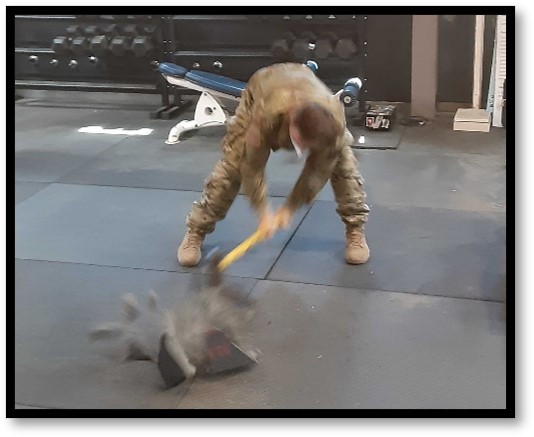
What we didn’t expect – but quickly became our favorite part – was what happened next. Rather than breaking the rock themselves, almost every squad leader instinctively turned and handed the sledgehammer to a junior Soldier – often the one they felt had worked the hardest, improved the most, or demonstrated exceptional effort. A private who had given everything in the field now had the honor of breaking the rock in front of the entire company with loud cheers. The recognition didn’t just come from leadership; it came from within the team itself.
Once the rock was broken, it didn’t just disappear. Soldiers grabbed pieces of it, stuffing them in their cargo pockets or taking them back to their rooms. Over time, I’d find pieces of these rocks scattered throughout platoon offices, barracks rooms, and even taped inside lockers – small reminders of shared victories and the hard work it took to earn them. As we continued the tradition, the stack of broken rock fragments grew, symbolizing the cumulative effort of the company and reinforcing the idea that success wasn’t given; it was earned.
The tradition of “Breaking the Rock” became more than a post-training ritual. It was a physical representation of the company’s identity – a culture of grit, teamwork, and shared accomplishment. Soldiers wanted their shot at breaking the rock, not just for themselves, but for their squads. It turned recognition into something tangible they could see, feel, and hold onto long after the event was over.
Recognition is an Investment
Recognition is not just a leadership tool – it is an investment in human capital. By consistently recognizing Soldiers for their pursuit of excellence, leaders reinforce the behaviors that drive mission success. More importantly, they cultivate a sense of belonging, pride, and motivation that fuels individual and collective performance.
A well-structured recognition program does not rely solely on formal awards or material rewards. Instead, it emphasizes genuine, timely, and meaningful acts of appreciation – whether through personal interactions, public acknowledgement, or team traditions like Breaking the Rock. By investing in recognition, leaders build a culture where Soldiers strive to improve, take ownership of their development, and remain committed to their teams.
Ultimately, leadership shapes culture, culture influences behavior, and behavior produces results. Company commanders and first-line leaders have the power to make recognition an enduring part of their units, ensuring that Soldiers feel valued not just for their accomplishments, but for their dedication to the mission and each other. The next war will demand units and people that are resilient, cohesive, and committed. A unit that consistently recognizes excellence doesn’t just perform well – it thrives.
Major Daniel Jin-Su Sprouse is an active-duty Infantry Officer currently serving on the Army Staff at the Pentagon as a part of the General Omar Bradley Fellowship. Previously, MAJ Sprouse has served on the Joint Staff, 5th SFAB, 7th ID, 3rd Ranger Battalion, and 10th MTN DIV.