by Ned Marsh
From 2022 through 2024, I served as one-third of the command team for the U.S. Army Garrison Fort Detrick, Maryland. Garrison command became the highlight of my career—the best job I never thought I wanted. First, it was a job that was professionally and personally fulfilling. It also made me a fundamentally better Army officer and it continues to benefit my career and life. For those reasons, I now advocate for garrison command to all Army officers. It’s good for them, good for the U.S. Army, and, most importantly, good for Service Members and their Families.
When I took garrison command at Fort Detrick, I knew nothing about the science of installation management. How was I qualified to run public works, emergency services, human resources, or morale, welfare, and recreation directorates? I was metaphorically parachuted in to provide enterprise representation and leadership. Until then, I had spent my career in the infantry and special operations. I knew little about budgets, nothing about civilian workforce management, and less about child and youth care. It was a lot of information with a steep learning curve. However, I was advised by civilian employees with decades of experience in installation management. I just needed to shut up, listen, and learn. They guided me, mentored me, and we became an effective team. Learning the science of installation management proved to be interesting and enjoyable; it also provided me with critical fundamental knowledge required for higher-level organizations and enterprise jobs.
Arguably, I learned more in those two years than I had in the previous ten years combined. I left garrison command with a detailed understanding and appreciation for command relationships, the Army enterprise, readiness, modernization, and base support activities. The problems were fresh, the solutions were different, and it energized me.
The job was also a lot of fun. The Command Sergeant Major and I drove large snowplows, checked IDs at the gate, trained with first responders, explored industrial and scientific infrastructure, rode in parades, raced horses, sat in the dunk tank, and did many things not typical of an Army career. We connected with our community both on and off the installation. We spent time with veterans, retirees, local government leaders, Gold Star Families, and people from all walks of life in good times and tragedy.
Prior to garrison command I was a consumer and a complainer of garrison services. At the time, I had spent 22 years in the Army, during which I had unwittingly interacted with garrisons without knowing how they supported me as a Soldier or as a member of a unit. I left garrison command with a richer understanding and newfound awareness. Currently, as a Deputy Commander of a unit on an Army garrison, I am exponentially better able to leverage garrison support for our unit’s members and families, for our infrastructure, and for our warfighter training and readiness.
The organizational motto of the U.S. Army Installation Management Command (IMCOM), which oversees 104 small- to medium-sized cities worldwide from Korea to Poland, is “We Are The Army’s Home.” IMCOM takes care of the Army’s home by delivering quality base support from the Strategic Support Area so the Army can fight and win our Nation’s wars.
Our garrison delivered base support for readiness and mission assurance in support of the U.S. Army Medical Research and Development Command. We put people first, executed the seven core Army Values, sought purpose for the unit’s efforts, and remembered that the garrison’s success was defined by the success of those who lived and worked on the installation.
Garrisons provide and integrate base operations by offering Soldier and Family Services, managing the Regular Army’s infrastructure, and supporting Warfighter Readiness and Deployability. While the garrison’s chain of command is through IMCOM, every garrison directly supports the senior Army commander, who dual-hats as the primary mission commander and the installation commander. Through the senior commander’s authority, the garrisons support the entities and organizations that are tenants on the installations.
I assumed garrison command informed by hearsay and others’ opinions. What I found and experienced was much different. We worked every day to solve one problem or to make life better for Service Members and their families. With this attitude, we quickly realized our influence was profound. With compassion and passion, we influenced the installation to be the type of place Service Members and employees wanted to live and work. Garrisons can’t solve every problem because there are limited people, resources, and time, but I’m proud to say we solved many.
Putting people first became the key to our success. When we took care of and supported our people, our most precious resource, they accomplished their assigned missions. Indeed, it makes a difference to Service Members when senior leaders demonstrate they’re willing to solve what could be considered a small problem. Small problems are often big to someone.
Lt. Gen. Omar Jones, IMCOM Commanding General, frequently said: “Our numbers may look fine in the aggregate, but we win and lose with each other.” It doesn’t matter how good our numbers look; taking care of people means making an authentic effort to help those in need. As a garrison commander, I was empowered to identify the problem, then reduce and remove friction.
On a professional level, the job was equally satisfying. The garrison is a largely civilian organization. Of the seven hundred fifty employees at Fort Detrick, only six were uniformed Service Members. The rest were appropriated and non-appropriated Department of the Army civilians or contractors. These civilians deserved good leadership, just like any uniformed Service Member. Together, the command developed and implemented a leadership philosophy. By adhering to the principles of the Service Culture Campaign, which are interconnected through leadership, talent management, communication, recognition, and providing a sense of belonging, we positively transformed the command climate and organizational culture. We leveraged our leadership experiences, both the good and the bad, and executed our vision. The satisfaction and fulfillment came from seeing, hearing, and feeling the positive effects of our leadership. We improved the quality of life and work for our team and many others.
Garrison command was the type of job I had sought my entire career. My two bosses, the installation senior commander and the IMCOM Sustainment director, both division command equivalents, had large portfolios, significant responsibilities, and little capacity or desire to micromanage the garrison. My role was clearly defined by a detailed installation leadership Terms of Reference, and I was empowered by the senior commander with a significant Delegation of Authority. The result was that our command team operated with minimal direct supervision while having as much legal authority as possible I called my bosses to keep them informed or when I needed help. They offered mentorship, advice, and resources when they were able. But I was largely left alone to solve the problems as I saw fit.
I lived and worked within my operational environment. I managed the critical relationships, set the unit’s priorities, and allocated my time where I thought there needed to be command emphasis. Fort Detrick is home to the National Interagency Bio-Defense Campus, multiple Bio-Safety Level 4 laboratories, the National Cancer Institute, and National Capital Region Strategic Communications infrastructure. The job pressure was real. However, successfully managing it was a professional fulfillment unlike any I had felt before.
Everything we did was in support of Army commanders from the company through division levels. It is essential for Army commanders at every level to understand the basics of how our enterprise operates. Often, I knew more about how their units interacted with the environment than they did because my job required me to have that access. Unit commanders were often focused on current operations and doing what they already knew how to do. But organizational leadership is about harnessing the environment, systems, and processes around you to enable success. Having garrison experience enables agile and effective company- and field-grade leaders.
Yes, at times it was frustrating and challenging. However, what job doesn’t come with frustration and challenges? In my life, the hardest things I have done have provided me with the greatest and most enduring satisfaction. Customer service is hard. Town halls and Interactive Customer Evaluations (ICE) can be frustrating and painful. Fortunately, I had a good Command Sergeant Major who centered us on what was important: that despite the anonymity or harsh criticism, the frustrated customer was often right, and we could help.
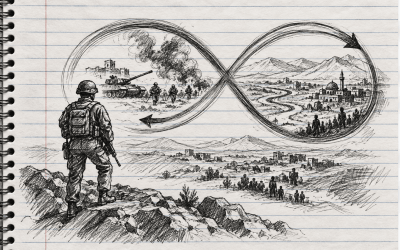
I had an experience during a housing town hall with an upset resident taking the opportunity to rightfully vent their frustration. The Garrison is responsible for managing the three-way relationship between the contracted privatized housing partner, the residents, and the Army contract holder. Sometimes, these events can be uncomfortable; we try to focus on being productive, but it’s a human business, and emotions can run high. After communicating their criticisms, the resident apologized for “lobbing grenades.” I wasn’t there to take offense at what they were saying but to listen and get the system to work. I was a Special Forces Officer who had volunteered for and participated in combat on multiple occasions. Enemies had literally shot rocket-propelled grenades at me, and nothing I experienced in Garrison Command was as emotionally or technically challenging as combat. Too many times, I have had peers communicate concern about working in a Garrison; simply put, it seems hard and frustrating. It is seemingly not what most officers signed up to do. I argue to the collective that if we sign up for combat, then we can also handle the relatively minor bumps and scrapes of Garrison life.
U.S. Army garrison command was and is one of the most rewarding experiences of my career. It’s a career path I recommend to all Army Officers who can provide significant personal and professional fulfillment. It opened post-command job opportunities while giving me the confidence required to operate at higher levels. I developed and learned fundamental skills critical for future success. If you seek to make a difference or desire a job where your influence can improve the lives of Service Members and their families, then I strongly urge you to consider garrison command.
Col. Ned Marsh is the Deputy Commanding Officer for Support at Special Operations Command Europe. A joint qualified officer, he previously commanded the garrison at Fort Detrick, Maryland. The Connecticut native and 2000 Providence College graduate commissioned through ROTC as an infantry officer. He holds advanced degrees from the Naval Postgraduate School, the Army School of Advanced Military Studies, and the Army War College. He has served in the SOCOM and Army enterprises for 25 years with experience across the U.S. Central, Indo-Pacific, and European Geographic Combatant Commands.