by Shane Hughes
“A toxic leader devastates the esprit de corps, discipline, initiative, drive, and willing service of subordinates and the units they comprise.” (Christopher Doty, 2013)
The U.S. military prides itself on developing leaders. We continuously update leadership training and spend millions of dollars each year to send officers to leadership training events and formal schooling. Unfortunately, in many organizations like the U.S. military, a psychological phenomenon called pluralistic ignorance enables bad leaders to rise through the ranks despite their character flaws and poor leadership skills. Military culture is uniquely vulnerable to this phenomenon, and service members must diligently work to prevent it.
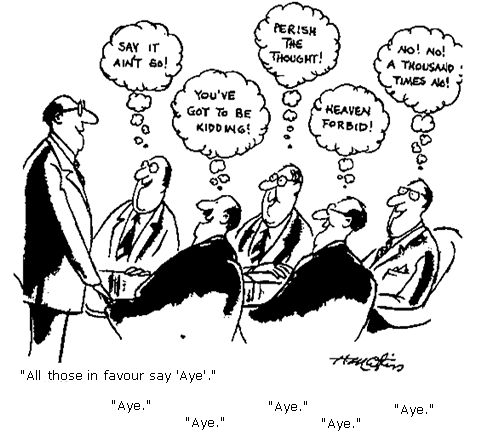
Pluralistic ignorance refers to a situation in which virtually every member of a group privately disagrees with what each believes are the prevailing attitudes and beliefs of the group as a whole. A classic example is when someone in a group of friends steals from a store, other members of the group may remain silent because each person thinks the majority of the group condones the behavior. Another example of pluralistic ignorance in a military context is the prevailing attitude toward mental health. Several members of a unit may be struggling with their mental health, but each of them believes that they are the only ones feeling this way. Service members may think their peers are coping just fine, so they choose not to speak up for fear of appearing weak or unfit for duty.
The U.S. military is an organization uniquely prone to pluralistic ignorance, where strong group norms and a high value placed on conformity create an environment where pluralistic ignorance thrives. This leaves the military vulnerable to toxic leaders who manipulate the promotion system to advantage themselves and rise to the highest ranks while their subordinates muzzle themselves because of pluralistic ignorance. Understanding and deliberately combating the negative effects of pluralistic ignorance is vital for maintaining the U.S. military’s competitive edge. To combat pluralistic ignorance, U.S. military professionals must understand why their own service culture is uniquely vulnerable to it.
There are three elements of U.S. military culture that cultivate a rich environment for pluralistic ignorance to thrive:
- Short-term leaders and guaranteed changeover
- Institutionalized deference to senior leaders and the high value placed on conformity
- Fear of reprisal
Short-term Assignments
First, people often suffer-through bad leaders rather than confront or demand transparency when they know the experience is short-term with a guaranteed end date. The lack of long-term stability creates an environment where subordinates may feel that voicing negative comments or complaints about their bosses would be futile, as the leader will soon move on to a different position or unit anyway. It instills a culture of silent survival, where people choose not to speak up about issues or problems they are experiencing. A group of mid-level leaders called the ‘frozen middle’ often choose silent survival in lieu of vocally demanding transparency and accountability. Their silence can be particularly problematic in toxic leadership situations. Mid-level management’s apathy towards action against a toxic leader confuses other members of the organization who start to question whether the leader is actually doing anything wrong. Those confused subordinates fall prey to pluralistic ignorance: they silence themselves because they believe everyone else approves of the toxic leader. Thanks to organizational pluralistic ignorance, eventually the military personnel system will allow the toxic leader to continue onward and upward, only to become another unit’s problem.
Institutionalized Deference and Conformity
Second, pluralistic ignorance thrives in the U.S. military’s hierarchical structure which institutionalizes deference to senior leaders. This deference results in subordinates surrendering to the decisions of their senior leaders even if there is a valid reason not to do so. (Think of the character Kurtz and how his followers blindly obeyed him in the movie “Apocalypse Now”). This deference can lead people to routinely brush off a leader’s unprofessional comment, an unethical act, a lack of empathy, or even a strategic misstep. Institutionalized deference leads subordinates to assume these behaviors are exceptions to the norm, even when they may actually be a consistent pattern.
Have you ever had a bad interaction with the senior leader of your organization and shrugged it off as “Oh, I’m sure they are having a bad day. They did not mean that?” Alternatively, have you walked away thinking, “I feel like that was inappropriate, but I probably misread the situation? It was probably something I did wrong. That leader wouldn’t be in the position they are in with characteristics or beliefs like that.” This is what Daniel Coyle labels a charitable assumption in his book Culture Code: The Secrets to Highly Successful Groups. Charitable assumptions in a culture normalized by institutional deference can give a toxic leader free range to continue destructive behaviors.
For example, as an executive officer to a senior leader once witnessed an important update meeting scheduled for weeks suddenly canceled. The team spent over twenty hours preparing for this update meeting and paused the progression of other work for weeks while awaiting further approval and direction from the boss. When the action officers received the cancellation notification, they stopped by the office and were obviously disappointed. However, everyone assumed the cancellation was for a higher priority, a last-minute event that required the boss’ immediate attention away from the office. Instead, the team later found out that the boss just wanted to stay home and watch a football game, showing little to no regard for his subordinates’ time. However, out of deference to the leader none of the subordinates spoke up. This lack of accountability, if left unchecked, enables bad leaders to mismanage resources, including our service members’ time and effort.
Fear of Reprisal
Finally, fear of reprisal contributes to pluralistic ignorance in the military. Commanders of course wield significant power and influence over the service members they lead. While most leaders wield this power in the organization’s best interest, a toxic leader abuses this power, taking advantage of fear and using it to manipulate. A commander has a lot of power over their subordinates’ careers. A commander can unjustly write a poor performance report and derail someone’s career. A senior leader can make an off-handed comment alluding to poor performance that destroys someone’s prospects of future key developmental jobs. A mere lack of pushing someone’s name forward for command boards can halt career progression. So undoubtedly, service members consider a commander’s retaliatory options, and his likelihood to use them, when considering whether to speak out or remain silent.
Furthermore, the institutional process established to report toxic leadership and any subsequent reprisal is long and cumbersome. For example, between 2013-2018, the Inspector General Office (IG) required an average time of 194 days to investigate a senior leader in the Air Force. Furthermore, between 2013-2018, the average time to investigate a three- or four-star Department of Defense (DoD) senior leader was 312 days. Investigations require combing through an ever-increasing amount of digital and electronic evidence, and IG programs have not received the requisite amount of increased budget and personnel. Investigative timelines are too long and consequently erode trust in the IG process, preventing many people from following through with a complaint and exacerbating a lack of accountability.
Additionally, during these extended investigative periods, there is an increased opportunity for reprisal against the people who filed the complaint against the senior leader. Unfortunately, the percentage of submitted reprisal complaints that are substantiated is extremely low, averaging between only 2 and 6 percent. If a reprisal case is substantiated, the member who suffered reprisal then must navigate an even longer timeline to correct their personnel records.
—
Military culture has a unique vulnerability to pluralistic ignorance, and service members must work especially hard to prevent it. Pluralistic ignorance is a phenomenon that happens unconsciously–until we talk about and dismantle its power by making it conscious. We must encourage and, when able, facilitate transparent leadership regardless of our position or rank. I propose the following recommendations to prevent or reverse the effects of pluralistic ignorance:
- Educate employees on pluralistic ignorance: Ensure your team is aware of pluralistic ignorance and its dangers. Provide training on how to recognize and avoid it. To quote G.I. Joe, “Knowing is half the battle.”
- Respectfully demand transparency: A transparent leader communicates openly and honestly with their team, sharing information about decisions, plans, and challenges. You can facilitate more openness from your leadership through the questions you ask in public forums.
- Foster an inclusive, psychologically safe environment: Create an environment where individuals feel comfortable expressing themselves and do not fear retribution for dissenting opinions. Incorporate workshops and training focusing on the value of diverse teams into Professional Military Education (PME). As a leader develops, they must learn to not feel threatened by dissenting opinions, but embrace it as a valuable step towards finding the best solution to a problem. 360-degree feedback is one way to gather information on the type of environment a leader creates, and provides the opportunity for self-reflection and early correction when necessary.
- Active listening: Be an active listener and highlight when others are also doing so in order to encourage the behavior. For example, recently I genuinely thanked a senior officer for paying attention during a 2-minute engagement in his office. During those two minutes, three emails chimed on his computer, and the phone rang once. He never darted his eyes over to look at the computer screen. He never looked at the clock or discreetly tried to glance at his watch. Active listening is a valuable tool to clarify misunderstandings and enhances transparency, thereby reducing opportunities for pluralistic ignorance to take form.
- Push for decisional accountability: Under the guise of asking how a process works, ask further probing questions about decision points and who makes those decisions. For example, as a squadron commander one of my Airmen asked me to explain a local area mileage restriction for members on deployment alert. It was a fair question, and forced me to explain my decision process. While the Airman was not thrilled about the decision, he walked away understanding (and even reluctantly agreed to) the policy. Decisional accountability forces leaders to think through and provide context for their decisions, increasing transparency and decision-making.
- Use anonymous feedback mechanisms. Fill out your unit’s climate assessment survey every year. While you may not see an immediate change from this, it establishes a record of a leader’s performance that follows them their entire career. Establish a paper trail when leaders do not perform.
In conclusion, the pernicious effects of pluralistic ignorance within the military cannot be overstated. This psychological phenomenon acts as a catalyst, enabling toxic leaders to ascend and thrive. In the U.S. military in particular, our culture of high leadership turnover, institutional deference, and the potential for reprisal makes people less likely to speak out against toxic leadership and makes pluralistic ignorance an enduring challenge. As military service members, it is our responsibility to actively participate in creating a healthy, productive environment. We must be vigilant against the traps of pluralistic ignorance and use the tools listed above to facilitate transparency, hold each other accountable, and ensure the rise of competent, ethical leaders who lead well for the right reasons. Let us continue nurturing a culture where integrity and excellence are not just ideals, but realities.
Lt Col Shane Hughes currently serves on the Fifth Air Force Staff with a focus on strategy and plans in the Indo-Pacific Region. He is a Mobility Air Forces pilot and USINDOPACOM Foreign Area Officer, writing previously on the subjects of Great Power Competition, Leadership, and Ethics and Emerging Military Technology. He can be reached via his LinkedIn profile.