By Jake Murphy
It is all too easy to forget that higher echelons exist to set the conditions for small units, in both tactical and garrison environments. To combat this, it is critical to trust subordinate leaders to effectively lead their formations. Staff must assist, not burden small units and tactical leaders. It is incredibly common to find battalion and brigade staff personnel who consistently have workdays that are over ten hours while in garrison. This hurts their respective organizations in a few ways. Soldiers on staff grow bitter, resulting in lower qualities of work and a likely departure from the military. This also reduces the lethality of companies and platoons as higher echelons create requirements for junior leaders to complete, reducing the amount of time they can lead and teach their formations.
There are already too many training requirements. The US Army War College found in 2015 that there would need to be 258 more work days per year to meet every requirement. Staff at all levels will create more ready and effective formations if they reduce tasks to lower echelons, provide more time for retraining, and place more trust in subordinate units to train their formations without stringent oversight from higher level commanders.
FM 7-0 Chapter 1 Paragraph 19 states that Army units are to train one echelon down and evaluate two levels down. This doctrinal principle must be applied and followed. Platoons should commonly deploy into the field and train their Squads without the involvement of Commanders. This will result in teams, platoons, and squads getting more repetitions of important tasks and skills. Similarly, Company Commanders should deploy and train platoons in the field without the oversight of the Battalion Commander. It is critical that platoons have four proficient squads who are well rehearsed together prior to the battalion commander’s assessment of the formation’s ability to perform the assigned task. This only occurs if small teams are trained and proficient in individual tasks and drills.
Growing Discontent: The Unseen Impact of Misguided Training
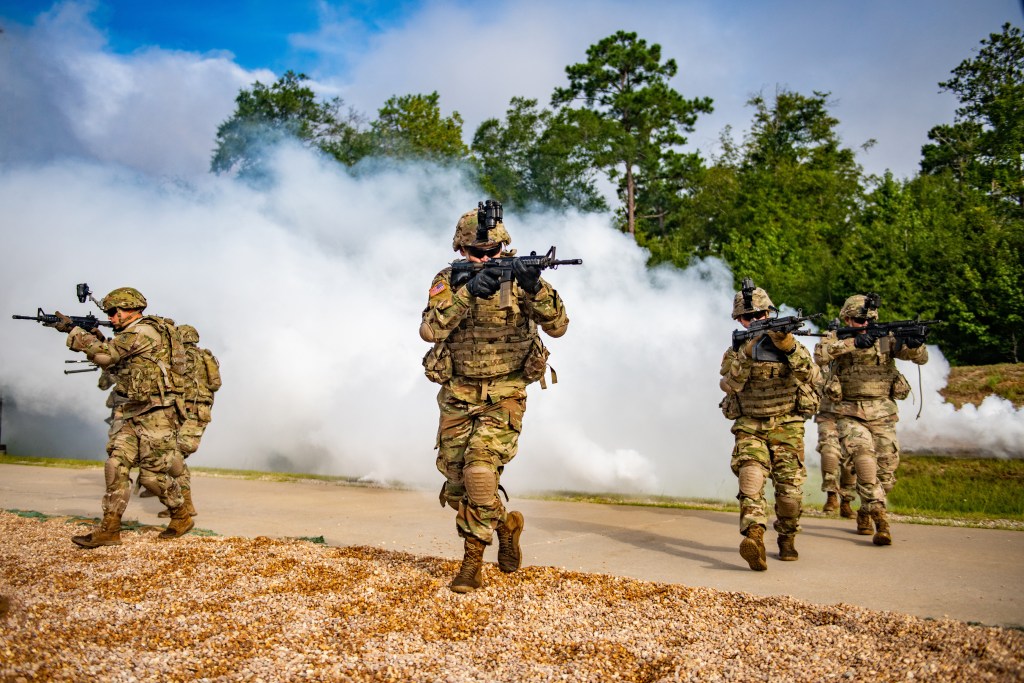
Training should revolve around the team, squad, and platoon. These are the echelons that are in the fight. This requires less involvement from Battalion and Brigade staff, and more time for retraining. When Battalion and Brigades deviate from training and doctrine, it often results in lower echelon training occurring less frequently and less deliberately than necessary.
Leaders often use the phrase “good squads make good platoons”. The focus of all leaders should be setting conditions for squads and teams to be successful. Units conducting training cycles should spend very little time training at any level above the Company. If a formation’s subordinate leaders are trained and proficient, it makes the commanders’ jobs much easier. Effective small units are easy to lead. It is important to train mission essential tasks and battle tasks with both quality and frequency.
A small unit and individual training focus can also allow Battalion and Brigade staff to reduce time spent planning training at echelons that Company Commanders and Platoon Leaders should drive. This allows Field Grade Officers and Sergeants Major more opportunities to develop their staff and circulate the battlefield.
Company level leaders want to lead and exercise autonomy of their formations. It is this lack of autonomy of junior leaders that results in them becoming handcuffed by their organizations. There are metrics required by the Army and higher echelons of leaders that take many hours away from company commanders and other company level leaders. Many of these requirements have no tangible effect on the formation.
Untangling Training from Validation
Too often, the Army conflates validation and training. Rifle qualification is not good marksmanship training, and a Battalion Commander watching a few repetitions of a platoon performing a raid does not result in a trained platoon. These tests are supposed to be the proof that an individual or unit is combat ready, not the only training opportunity they are afforded during a training rotation. Yet too often, the Army tries to teach and validate at the same time. While learning can still occur during these events, the army often exclusively resources these events at the expense of repetitions to master the basics. It is critical that small units get ample opportunity to practice basic skills such as physical fitness, rifle marksmanship and tactical movement, even if it is at the detriment of company, battalion, and brigade level operations. It is all too common that collective training arrives without the completion of requisite individual training.
To effectively train lower echelons, battalions and brigades must be comfortable with companies being temporarily desynchronized within their training progressions. If a few teams or squads are taking more time to become trained it is important that retraining occurs. Battalions and brigades must allow more time for retraining in the event that small units are not yet proficient.
If given more flexibility and control over their formations junior leaders will further develop their leadership skills as they will have more decisions to make.
The battlefield is becoming more complex and will require more trust in subordinate commands. Allowing commanders to exercise more control over their formations will allow them to better train small units, and prepare them to operate with more autonomy in the next fight and drastically increase the lethality of their formations.
1LT Jake Murphy currently serves as a firing party platoon leader at 1st BN 3rd IN REG (The Old Guard). He previously served as a rifle platoon leader and a scout platoon leader at 3rd BDE 10th MTN DIV. 1LT Murphy holds a Bachelors in Sociology from the University of Utah, and is pursuing a Masters in homeland security from Pennsylvania State university.