5 Lessons Books Taught Me in 2018

5 Lessons Books Taught Me in 2018

Since 2013, I’ve written an annual blog post highlighting my favorite books from the previous 12 months. This year I wanted to try something different. I wanted to share some of the  lessons I learned from the list of 40+ books I read. Even though each book offered numerous insights, I captured five significant lessons that resonated the most with me. Below the lessons is the full list broken down into categories.

1. Our Networks Are Everything

Many view networks through the lens of climbing the corporate/professional ladder, however they are so much more —they are everything. In Friend of a Friend, David Burkus argues that the people we surround ourselves with influence our development, our fitness, our happiness, and our overall success in life. In all the biographies I read, successful people such as Einstein, Leonardo da Vinci, or even Coach Saban, surrounded themselves with those who could help them grow and improve their craft. McCrystal also emphasizes the importance of strong networks in Team of Teams and even more so in Leaders: Myth and Reality. This lesson gave me a greater appreciation for my own networks and how I can leverage them to improve myself and others.

2. To Be Worth Following, You Have to Lead Yourself

All the great leaders I read about, had one thing in common: They led themselves. They made the most use of their time, were disciplined, and took their learning into their own hands. One of my favorite books on this topic was Robert Greene’s Mastery. He examines the process of mastering any skill and writes, “No one is going to help you or give you direction. The odds are against you. If you desire an apprenticeship, if you want to learn and set yourself up for mastery, you have to do it yourself, and with great energy.” Marcus Aurelius who served as the Emperor or Rome for almost two decades, reflected on the importance of gaining self control in Meditations and his ideas were further expanded upon in Ryan Holiday’s The Obstacle is the Way: The Timeless Art of Turning Trials into TriumphIn the end, our time wants to be filled, and where there is an absence of purposeful activity, time wasters will the void. If we can learn to master ourselves, we will be in a better position to lead others.

3. All Advice is Autobiographical

When people try to give us career or life advice, they typically discount the role that luck, networks, individuals, their families, and personal inclinations got them from point a to point b. I wrote about this in a post earlier this year. If we follow their advice, we may find ourselves heading down a dead-end road.  Tim Ferris, Ryan Holiday, Jonathan Haidt, and Stanley McChrystal all speak to the importance of understanding how multiple factors either contribute to or detract from our success and fufillment. For example, Doris Kearns Goodwin makes a case in Leadership: In Turbulent Times that the major setbacks of  Lincoln, the Roosevelts, and Lyndon Johnson eventually gave them the tools to succeed during rough periods of their presidencies. We should seek to understand what unique gifts we bring to this world, our purpose, and then set goals that are in line with both.

4. Culture Eats Strategy for Breakfast

One of my favorite quotes attributed to Peter Drucker is “Culture eats strategy for breakfast“. In other words, regardless of the strength of your plan or the number of star performers on your team, if the chemistry that holds everyone together is weak— your endeavor is bound to fail. The topic of culture came up time and time again in many of the books I read. Culture Code, Team of Teams, and Radical Inclusion all offer sound advice on investing in organizational culture.

5. Write it Down

Reading books isn’t enough, we need to be able to absorb it and turn our knowledge into action. As Todd Henry points out in Die Empty, “Intellectual growth doesn’t occur from the accumulation of tidbits of information, but from considering it and integrating it.”  The heroes, masters, and leaders I read about over the last year wrote notes in the margins, captured their ideas in notebooks, and made this practice routine. This better enabled them to incorporate what they learned into their lives. Terry Doyle in The New Science of Learning makes the case that by writing in the margins or taking notes on what we read, we create multi-sensory connections to what we learn, thereby increasing the likelihood it will be stored in our long-term memory.

Below is the list of books I read this past year. I hope you find something that piques your interest and make reading a part of your daily routine.

2018 Reading List

Things I Wish I Would Have Known Before I was an S3

Things I Wish I Would Have Known Before I was an S3

4cc.jpg

By: Casey Dean

During the last few months of KD time I began to reflect on the things I wish I could have done better and captured those lessons. My goal was to pass these notes to my replacement in hopes he wouldn’t make some of the same mistakes. An armor or infantry officer will have less than two years as an S3 or XO, so the first 3 months are crucial in establishing credibility within the organization. Since there isn’t enough time in the world to cover all of my mistakes here are the highlights to help if you’re in KD now or beginning soon. I hope it helps you.

Be organized to your comfort level

If a cluttered desk is a sign of a cluttered mind, of what, then, is an empty desk a sign?” Attributed to Einstein, but I could have done better. I’m a visual learner, so over time I learned to have a couple of things out in the open at all times. Latest version of our calendar/sync matrix, maps of our AO, and commander’s guidance and priorities.

It’s one thing to have a cluttered desk. Having a cluttered digital desktop is detrimental. Ensure you have a system to save and organize your files for yourself and your team. For emails, I wish I would have organized my inbox into small (5GB or less) PSTs. This gives you the ability to quickly move them from desktop to sharedrive and if one corrupts, you haven’t lost everything. For the organization, pick a strong junior officer or NCO to make the knowledge management guru and supervise your SharePoint/shared drive.

8 Must-Read Science Fiction Books

8 Must-Read Science Fiction Books

EYE_biohacking.jpg

Within the last few years, we’ve witnessed the evolution of biohacking, the rise of a state-based social credit system, and a US election influenced by the use of artificial intelligence. Futurists might be able to follow the thread on one or two of these technologies to determine where they will lead us. We may even be able to capitalize on this understanding to improve our national security. But what happens when they converge? How do we prepare for a future where additive manufacturing meets biohacking meets a “lost boy” with an axe to grind? Can we keep up?

McChrystal: Everything I Thought About Leadership Has Changed

McChrystal: Everything I Thought About Leadership Has Changed

Screen Shot 2018-10-23 at 6.43.28 PM

By Stanley McChrystal

Because leaders don’t rise as much as they emerge to fulfill a specific need for followers at moments, it can get dangerous when leaders emerge who give resonance to our darker impulses. To caution against this, we need to better understand why and how leaders emerge.

What we found upon looking back at 13 historical leaders—and we looked at a diverse group from Robert E. Lee to Margaret Thatcher to Zheng He—is that it was very easy to attribute broad trends and important outcomes to individuals. We oversimplify. We tend to overlook the facts and assume leadership follows a specific, replicable formula.

The Do’s and Don’ts of Letters of Introduction

The Do’s and Don’ts of Letters of Introduction

Feature-Image-History-of-USPS-e1438366076141.jpg

By Scott Shaw and Chad Foster

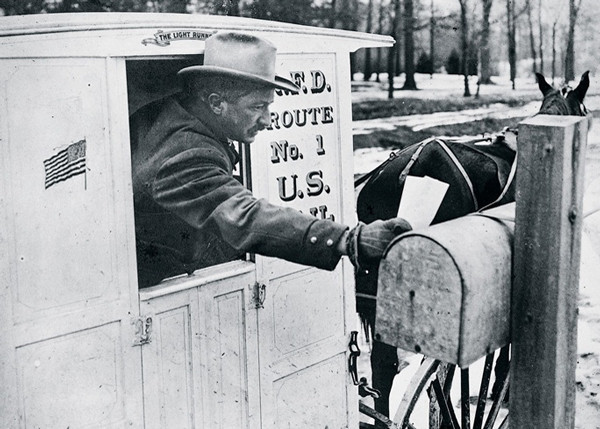
Writing letters of introduction to your future battalion or brigade commanders has been a staple of the basic and career course since we were lieutenants and captains (and before our time as well). This time-honored tradition has turned from one of envelope and stamp to a well-written email. Whatever the medium, the purpose is still the same – to say who you are and that you’re excited to be joining the unit.

So do they matter?

The short answer is yes. Both of us recently completed battalion command, and over the course of that period saw many emails come into our inbox from lieutenants in their basic courses and captains in their career courses. These emails typically reached us before their ORBs, so they were our first impressions of these new officers.

Below are some tips for writing a letter of introduction to your soon-to-be commander:

So You Want to Study Military Adaptation and Innovation?

1456516557973.jpeg

Adaptation and innovation are particularly relevant to today’s Army given the challenges faced in recent wars and the uncertainty of future armed conflict. Our ability to meet the operational demands posed by a variety of enemies and their capabilities and countermeasures will be part of our nation’s tactical, operational, and strategic landscape.

As we look forward to an uncertain future, we must adapt, innovate, and institutionalize both past experiences and future opportunities to better prepare us for the next war in whatever context that conflict will emerge.  As Sir Michael Howard observed:

“Steer between the danger of repeating the errors of the past because he is ignorant that they have been made, and the danger of remaining bound by theories deduced from past history although changes in conditions have rendered these theories obsolete.”

In other words, war audits how well military institutions and states prepare during periods of relative peace, and how their force planning processes succeed in capturing emerging technologies and innovative new methods.  Armed conflict also audits how responsive commanders and institutional leaders are to recognize opportunities or challenges that emerge from the violent interactions against a thinking opponent who demonstrates the capacity to generate surprise by employing unanticipated tactics or technology.  As we look to recent conflicts and potential asymmetric adversaries, the need to create a force capable of both innovation and adaptation is imperative.

What Does It Mean to be a Military Professional?

What Does It Mean to be a Military Professional?

Redefining the Modern Military (1)

By Tony Ingesson and Ray Kimball 

Over fifty years have passed since the seminal texts that fundamentally changed the conversation on professional Western militaries were written. Samuel P. Huntington’s The Soldier and the State, Morris Janowitz’s The Professional Soldier, and Sir John Hackett’s Profession of Arms  quickly became benchmark publications that framed the discussion of the military as a profession, their place in Western societies, and modes of civil-military relations. These texts emerged during the brief window between the Korean and Vietnam Wars—the last two wars that America would fight with conscripted forces—a critical and opportune time for the American military.

First, these writers saw on the horizon great changes in the way America would lead, train, organize, and equip its military. Second, the deep introspection in the military following the victories of the Second World War and, maybe more importantly, the perceived failures of the Korean War, helped shape Western militaries going forward. Finally, in the wake of the professional and ethical failures in Vietnam, these texts were well placed to help shape new, modern, professional militaries.

Following almost two decades in a protracted conflict, now is the perfect time to reassess the profession and the key elements of how we develop professionals. In our chapters of the forthcoming book, Redefining the Modern Military: The Intersection of Profession and Ethics, we address issues of professional identity and mentoring in the military. Both of these topics are enduring and important aspects of the profession of arms and contribute to the ongoing discussion about military professionalism in ways that will resonate with junior officers, NCOs and PME students alike.

The 8 Lessons of Leadership I Learned Brewing Coffee – A Tribute to BG Sean P. Mulholland

The 8 Lessons of Leadership I Learned Brewing Coffee – A Tribute to BG Sean P. Mulholland

509141291-612x612.jpg

By Alex Licea

I originally wrote this over two years ago. It’s about the leadership lessons I learned brewing the morning coffee while working as the enlisted aid for then BG Sean P. Mulholland, who was the commander of Special Operations Command-South (SOCSOUTH).

This blog post now has even more of a special meaning for me. While these lessons still play an important part in my life and my military career, this article now serves as a tribute.

This is because our military community lost a great brother-in-arms on August 8, 2018 when BG (Ret.) Sean P. Mullholland died at the age of 58. Sean Mulholland was not only a great military officer, he was a great man who cared about his people.

It would only be fitting on National Coffee Day to share the lessons I learned as a tribute to a man who liked his coffee with absolutely no cream or sugar.

How to Develop a Mission Mentaility

How to Develop a Mission Mentaility

1*bAfc3AxpvbN9bLdAiaafCQ.jpeg

By: William Treseder

This post is a short excerpt from his new book RESET: Building Purpose in the Age of Digital Distraction

Hungry For Purpose

The Ancient Greeks used the word telos. The best translation is “end-purpose” or “end-goal”. I really love this concept. The telosof a thing. What is its purpose? Why does it exist? This is a key element that entrepreneurs coax out of themselves, even if they need a little help sometimes.

The telos unlocks their enthusiasm and drive by providing a true north. The telos becomes their mission. Their purpose. Their reason for taking every breath.

Most people do not think about the world like this. We get dragged away from the most important considerations by a constant barrage of pointless junk. The natural friction of life — bills, traffic, paperwork — forces us to spend our precious time worrying about the details.

Looking for Career Advice? Start in the Mirror

Wall-Mirror.jpg

As soon as I signed my military contract in 2001, I started receiving career advice. Leaders, from my professor of military science to future commanders, began sharing their wisdom with me on the right branch, the perfect career-enhancing positions, and the lock-step series of assignments I should compete for to be successful. I’ve also given career advice to the officers I had the privilege of mentoring. But along the way, I’ve learned something about career advice — it is all autobiographical.

Everyone has a different idea of success and what steps should be taken to achieve it. Everyone has benefited from (or been victim of) luck, timing, and tribes. What worked for one person’s career might not work for someone else, and what one person may view as a career-ending assignment could be the springboard for a leader with a different skill set.

Yes, there are gates that everyone must walk through to be considered for promotion, and certain assignments do lead to better chances of gaining specific positions, but this post is not about that progression. This is about the approach to that progression. If young leaders don’t take into consideration a couple of different factors when making career decisions, they could blindly follow in someone else’s footsteps, leading them not to success, but to disappointment and regret.

So what should we consider when making career decisions?