From Hal Moore’s Bookshelf: What He Underlined

From Hal Moore’s Bookshelf: What He Underlined


Halmoore

By David Moore

My father, LTG Hal Moore, passed away two years ago on this day -10 February, three days shy of his 95th birthday. The purpose of this article is to not seek empathy but to use the occasion to reinforce a few beliefs that General Moore held dear. My method is to cite Owen Connelly’s book On War and Leadership from the Hal Moore Bookshelf.

Why cite this book? Because it is a collection of Western generals’ experiences leading in combat. And Hal Moore’s markings capture six values that he pulled from their experiences to develop and inform his leadership style.  We get a glimpse of what he learned from combat leaders such as Jackson, Bonaparte, Wavell, and Rommel.

General Donn Starry on Leadership

General Donn Starry on Leadership

23starry-popup.jpg

By Joe Byerly

As military leaders we should want nothing more than to give our enemies an unfair fight—with the advantage in our favor. And one way in which we do this is through training our forces. I can’t think of anyone who has written as extensively on the “why” and “how” of training as Gen. Donn Starry.

In Vietnam, he commanded the 11th Armored Cavalry Regiment. Following the war, he served as the commander of the Armor School, V Corps in Germany, and eventually Training and Doctrine Command. Under his leadership, the Army developed the AirLand Battle Doctrine in the early 1980s, which set the stage for the next two decades of force development. He retired in 1983 after commanding US Readiness Command.

A little over 40 years ago, in January of 1979 General Donn Starry addressed future battalion and brigade commanders at Fort Leavenworth’s Pre Command Course.

In the course of his remarks he provided leaders with insights on leadership that remain relevant today. Below are some excerpts from that speech.

On Careerism

What we’re trying to tell you is that, in some way to some extent careerism has kind of overtaken us. Entrepreneurship of the wrong kind has overtaken us. We are more concerned with my efficiency report and my outfit and my this and my that than we are in us, than we are in the results of the calculus that I’ve tried to describe for you. You have got to change that. Your leadership has to build synergism in your units so that something like that red line happens instead of the very high level of very low efficiency we have today.

The 7 Unwritten Rules of Email

The 7 Unwritten Rules of Email

ef8c5aa471135cd36c71634471aad6cc.jpeg

By: Dave Chace and Joe Byerly

In the military, we receive training or a manual on every piece of equipment and program we use except for one very important one: Email. Although it’s our least preferred method of communication, it’s one of the primary ways we communicate in garrison and combat. And many of us never learn to use this medium correctly.

Why does it matter? It matters because being able to effectively communicate through writing provides leaders and staff officers with understanding and the ability to act. And if we’re doing it efficiently, we give the person we’re communicating with time back to focus on other things besides reading emails.

What’s Really Wrong with Mission Command

What’s Really Wrong with Mission Command

5517929206_a2178bbefe_b.jpg

By Josh Suthoff

Recently, the Army Times published an interview with TRADOC Commander, GEN Stephen Townsend in which the primary point of discussion was that the decades-long Global War on Terrorism (GWOT) has eroded the decision making confidence of young leaders. Unfortunately, a perceived loss of decision-making ability is only a symptom of a larger issue.

The Army has a problem with underwriting acceptable risk, the trust that comes with acceptance of risk, and its effects on mission command. This is evident in how the Army manages information, leverages technology, and trains and manages risk in garrison and deployed environments.

A Leader’s Guide to Training for the ACFT: Part 2

A Leader’s Guide to Training for the ACFT: Part 2

1000x563_q95.jpg

By Tyler Inman

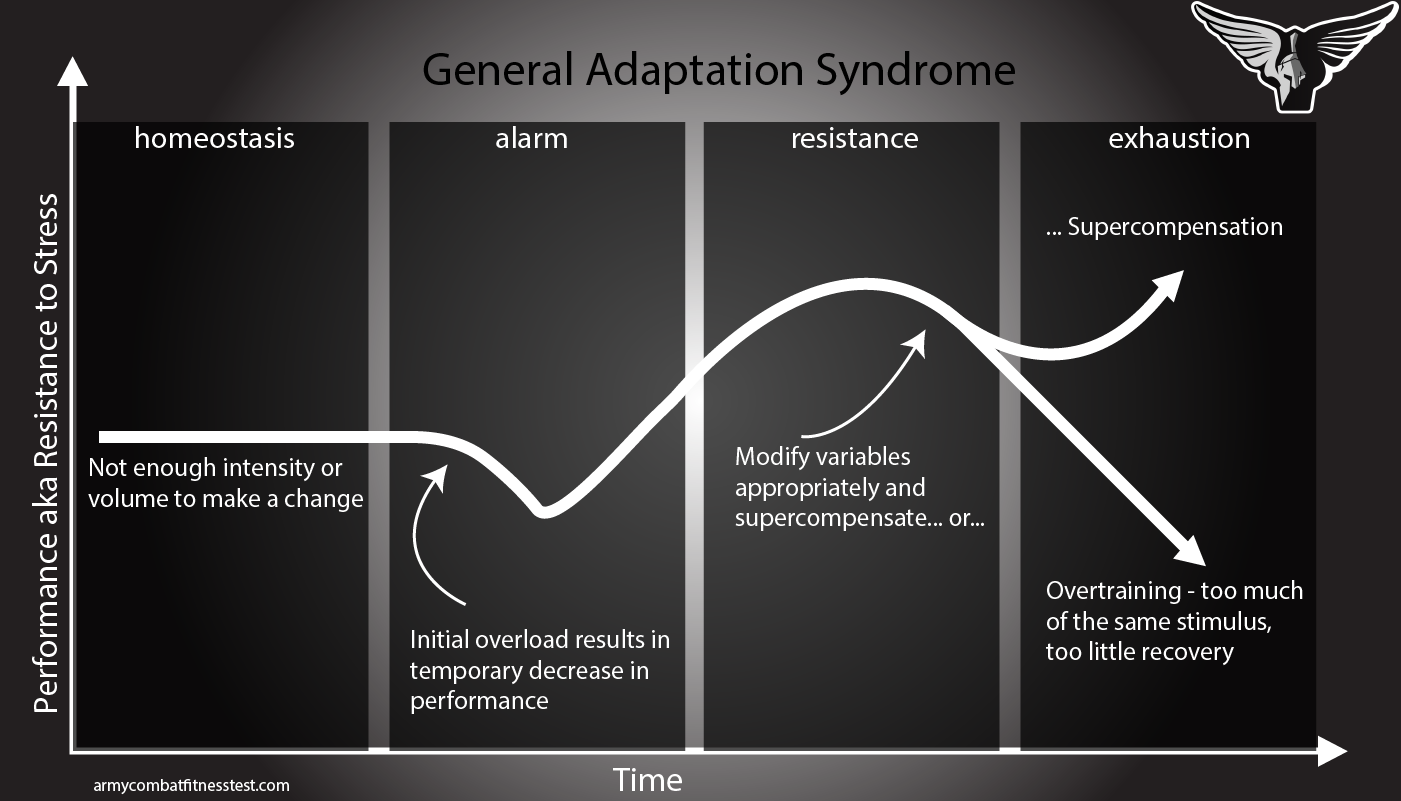
In Part 1, you learned that overload must occur to increase fitness.  Overload drives adaptation by creating enough stress to elicit a response. The key is a slow, smooth progression commonly referred to as progressive overload.  Part 2 will describe both the types of movements we should overload and the appropriate prescription to train each component of fitness.

Underlying Theory 2: Specific Adaptation to Imposed Demands (SAID Principle)

The body’s optimal response to stress is to increase the resistance to the initial stress so that we are more prepared the next time we face it.  This favorable adaptation is specific to the stimulus.  In other words, the training effect correlates directly to the type of training. Great endurance runners typically train using some combination of long-distance, aerobic training.  Their physiology is fine-tuned for aerobic endurance work in the modality of running.  Great endurance runners, despite good, hard training, are probably not great long jumpers because they do not frequently train in the power domain.  Likewise, despite a great aerobic engine, they may not be great long distance swimmers because they do not train frequently in the swim modality.

This brings to light two key applications of the SAID principle:  We must train specifically for the types of movements we intend to perform (the movement modality) and for the specific component of fitness we desire to exhibit (the fitness component or domain).

A Leader’s Guide to Training for the ACFT: Part 1

A Leader’s Guide to Training for the ACFT: Part 1

ffd98f50

By Tyler Inman

The Army will officially replace its current physical assessment, the Army Physical Fitness Test (APFT), with the Army Combat Fitness Test (ACFT) in October 2020.  Soldiers that currently earn 300 points on the APFT by focusing on aerobic and muscular endurance training (high volumes of running, push-ups, and sit-ups) are left with a choice: languish in mediocrity by scoring well in only one or two ACFT events, or drastically shift their approach to physical training by incorporating current strength and conditioning principles. This is not another opinion regarding the Army’s new fitness test. Instead, this is an Army leader’s attempt to distill the basic principles of exercise science into a palatable guide for planning Physical Readiness Training (PRT) that is effective, sustainable, and ultimately contributes to increased readiness for combat.

A New, More Demanding Test

The ACFT is a six event, 600-point, comprehensive physical assessment.  It is comprehensive because unlike its predecessor, the ACFT measures each major component of fitness: aerobic and anaerobic endurance, muscular strength and endurance, and power.  Scoring very well on the ACFT will also require coordination, balance, and stability. The six events, in order of execution are the 3-Repetition Maximum Deadlift, Standing Power Throw, Hand-Release Push-Up, Sprint-Drag-Carry, Leg Tuck, and 2-Mile Run.  Each event is scored on a 100-point scale, for a total of 600 available points.  Unlike the APFT, even very physically fit Soldiers will fall short of “maxing out” this new test and the ACFT is age and gender neutral.  One test, one scale, one challenging standard.

Preventing a Crisis: Your Unit PMCS Checklist

Preventing a Crisis: Your Unit PMCS Checklist

4099455.jpg

By: Orlandon Howard

Have you done any preventative maintenance on your unit lately? A crisis may be looming.

Corporations deal with issues and crises all the time. They typically have a lot at stake if they spiral out control, namely, money. The value of a company can be reduced drastically by a headline or a hashtag. So, they can be easily convinced of the merit of investing in preparedness and proactively monitoring and addressing issues before they turn into a crisis.

In the military, the incentives are different. There’s no stock price or fiscal bottom line to worry about (at least not as an immediate consequence). The drivers are more abstract and ideal. Arguably, military unit leaders have more meaningful and substantial incentives, namely, the moral, legal, and social responsibility to take care of the people who serve, and the organizations they serve in. Therefore, they must be just as mindful, adept, and agile at anticipating where issues arise, sensing them as they emerge and dealing with them before they boil over into a crisis.

UK Commanders Everyone Should Study

UK Commanders Everyone Should Study

uk-us-special-relationship.jpg

By: The Editors at the Wavell Room

We’ve teamed up with From the Green Notebook for a leadership exercise: A General Exchange. The idea is simple. Just put forward 5 British generals that are worthy of study by our American cousins. In return we get 5 American Generals worthy of study. The execution is less simple.

Where do you even begin?  We could go back as far as Oliver Cromwell and the New Model Army in the English Civil War. Or maybe dwell on any of the many generals who defeated the French… Army Generals from the First and Second World War spring immediately to mind; Haig, French, Monty, Slim, Carver, Alexander, I could go on.  And what should the criteria be? The Generals who delivered the biggest victories? The Generals who overcame the greatest odds? Or perhaps the less exciting ones? The reformers. Those who generated the biggest changes in the force?

10 Things You Should Know About Supporting Breastfeeding Soldiers

10 Things You Should Know About Supporting Breastfeeding Soldiers

BFarticle.png
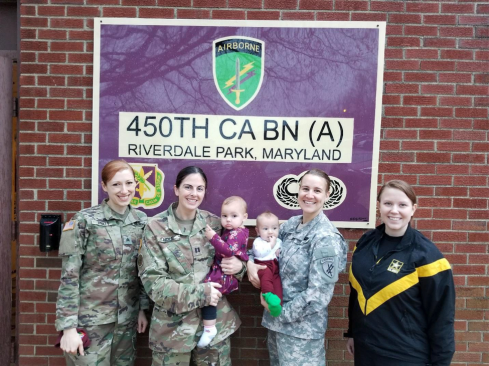
Army Sgt. Brittany Pratt, Army Capt. Lauren Holl, with daughter Isabella, Army Sgt. Wendy D’Angelo, with son Theo, and Army Spec. Katelyn Evans, pose outside the Riverdale Park Army Reserve Center in Riverdale, MD, Dec. 3, 2017. Assigned to the 450th Civil Affairs Battalion (Airborne), the soldiers are some of the new or expecting mothers in the unit. Photo by Joseph D’Angelo.

By Lauren Holl

The number of women entering the military has steadily increased during the last 30 years. Despite this trend, there continues to be a knowledge gap regarding best practices in supporting Soldiers who return to work after giving birth. In some organizations, this knowledge gap has negatively impacted the overall culture, and contributed to a loss of readiness and retention of qualified and capable Soldiers.

The ten simple suggestions below will enable leaders and first line supervisor to better support Soldiers and nursing mothers in formation when they return to work to help them stay mission focused. For medical advice, please consult a professional and remember that each woman handles pregnancy and recovery differently.

1- Know the regulations. The Department of Defense encourages breastfeeding up to a year, as it has proven medical benefits. Army Directive 2015-37 and Army Directive 2015-43 describes the commander’s role in providing, within reason, logistical support or alternative training plans for Soldiers who are breastfeeding during the first year of her child’s life. Each military service has a similar regulation.

Don’t Fail Your Final Mission: Retirement

Don’t Fail Your Final Mission: Retirement

itoRed3

This is not legal or financial advice, it’s simply how we successfully transitioned

By: Jason Criss Howk

I served in uniform from 1991-2015 as an enlisted infantry paratrooper and sergeant for five years and then a combat engineer officer, and finally as a South Asia foreign area officer (with a break in active service in the Reserves and ROTC).  After marrying, we moved around A LOT, living in 14 homes in 15 years as the Army snatched us up for rapid-fill missions.  This meant a couple things—we weren’t homesteaders anywhere and never put down roots in any community.  We focused on living on a tight budget and planning for a retirement date based on when we got tired versus when I made a certain rank or year-mark.

Health issues sped everything up as I approached the 19-year active service mark. We decided to end our service and rushed through our final year. Thankfully, retirement was a smooth transition, due in large part to prior planning. Retirement could have been a stressful life event if not for steps we took years before.  Today I am an educator that teaches, writes, speaks, and even hosts a podcast.  I also volunteer with non-profits, helping military families and endangered animals.  My passion is increasing tolerance among various religious groups though education. I wear Hawaiian shirts and collect books. Again, none of this would have been possible if we didn’t prepare for it.

When planning and executing your retirement, keep this thought in your mind…because time truly is money:

“Strategy is the art of making use of Time and Space. I am less in charge of the latter than the former. Space we can recover, lost time never.” -Napolean

Get your finances in order

If you screw up the financial piece of this mission, you will pay for it for the rest of your life—you can’t replace time lost.

How to Increase Your Professional Reading

How to Increase Your Professional Reading

We all can agree that reading is good for the brain. Leaders from George Washington to General Patton leaned on books to fill their knowledge gaps, and their efforts paid off on the battlefield. Former Defense Secretary James Mattis reflected on the impacts of self-study in a 2004 email that went viral:

Thanks to my reading, I have never been caught flat-footed by any situation, never at a loss for how any problem has been addressed (successfully or unsuccessfully) before. It doesn’t give me all the answers, but it lights what is often a dark path ahead.

But, many of us struggle with finding time to read or even get through more than a handful of books in a calendar year. Seven years ago, I averaged about five books a year. Now, I read between 25 and 40 books a year. While this increase can be partially attributed to my deeper commitment to my development, I believe that the practices I adopted helped as well, and I would like to share some of them with you.

1. Read Three Books at Once

I used to tackle only one book at a time. And if I attempted a dense book, it might take me months to finish. Sometimes I struggled to pick it up if it was boring, so by the time I finished, I was burned out from reading (and lost 3 months in the process). Now I might read one dense book (10 pages at a time), one fiction book, and one popular leadership book. For instance, I might finish three to four books before I finish a dry 350-page book  packed with great knowledge. I found that this helps me keep pushing forward with my reading goals, while not sacrificing the quality of the books I read.